Cockatiel Color Genetics Explained: Sex Linked Colors, Splits and Rare Mutations
Updated October 15, 2026
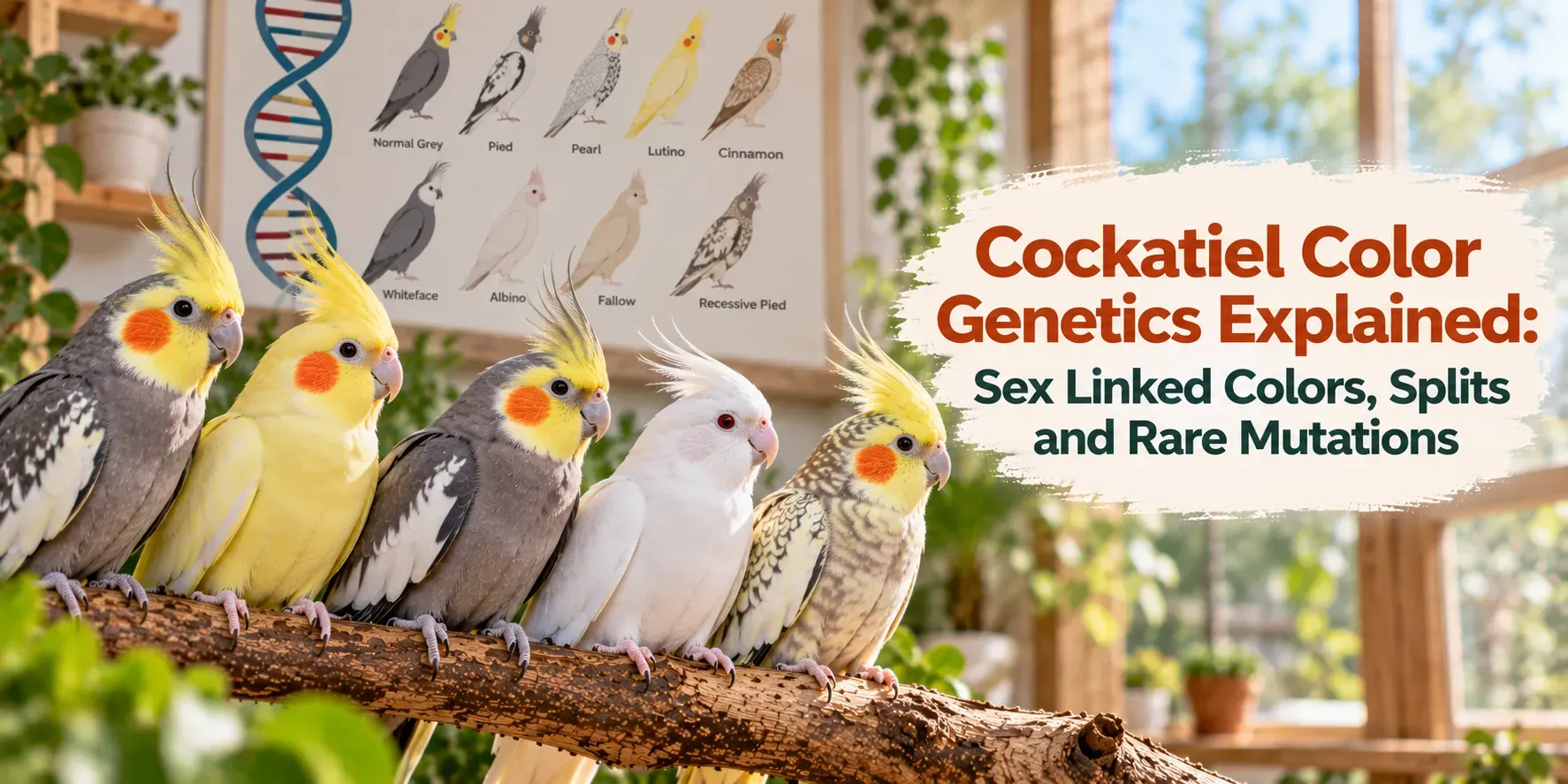
Cockatiels are the most colorful small parrots in the pet trade, with more than a dozen established mutations and countless combinations. But colors do not appear at random. Every one is inherited according to simple, predictable rules, and understanding those rules makes you a smarter buyer and a more confident owner. This guide explains cockatiel color genetics in plain language, including what sex linked means, what split means and which colors are harder to find.
The starting point: the Normal Gray
The wild cockatiel is the Normal Gray, with a yellow face and orange cheek patches. Every color mutation is a change from that wild type, and nearly all of them are recessive. A recessive gene only shows when the bird has two copies, or in the special case of sex linked genes, when a female has one copy. A Normal Gray can carry a hidden color gene and look completely normal, which is where the idea of a split comes from.
Two kinds of inheritance
Cockatiel mutations fall into two groups, and which group a color belongs to decides how it is passed on.
| Mutation | Inheritance Type |
|---|---|
| Lutino | Sex linked recessive |
| Pearl | Sex linked recessive |
| Cinnamon | Sex linked recessive |
| Pied | Autosomal recessive |
| Whiteface | Autosomal recessive |
| Fallow | Autosomal recessive |
| Recessive Silver | Autosomal recessive |
For photos and prices of each color, see our full Cockatiel colors and mutations guide.
What does sex linked mean?
In birds, males carry two matching sex chromosomes and females carry two different ones. The sex linked color genes sit on the chromosome that males have two of and females have only one of. That has a big effect. A female only needs one copy of a sex linked gene to show the color, because she has no second copy to hide it. A male needs two copies to show it, so a male with one copy looks Normal but is a carrier, or split.
Worked examples for sex linked colors
These examples use Lutino, but the same pattern applies to Pearl and Cinnamon.
-
Lutino hen with a Normal male: all the sons look Normal but are split to Lutino, and all the daughters look Normal.
-
Lutino male with a Normal hen: all the sons look Normal but are split to Lutino, and all the daughters are Lutino.
-
Split male with a Lutino hen: half the sons are Lutino and half are split, and half the daughters are Lutino and half are Normal.
-
Lutino male with a Lutino hen: all the chicks are Lutino.
This is why sex linked pairings are so useful. In some pairings, the color of a chick can predict its sex, and breeders plan matings to produce the colors they want.
How autosomal recessive colors work
Pied, Whiteface, Fallow and Recessive Silver do not depend on sex. A chick shows the color only when it inherits one copy from each parent. If both parents are visually Pied, every chick will be Pied. If both parents look Normal but are each split to Pied, about one quarter of the chicks will be Pied, about half will look Normal and be split, and about one quarter will be Normal with no hidden gene. The same logic applies to the other recessive colors.
What does split mean?
A split bird looks like one color but carries one hidden copy of another. A Normal Gray that is split to Whiteface looks entirely Normal, yet it can pass the Whiteface gene to its chicks. Breeders write this as Normal split Whiteface. If you are buying a cockatiel only as a pet, splits matter little, but if you plan to breed, knowing what each parent carries is essential.
Combination colors
When two or more mutations appear in the same bird, the result is a combination color. Some of the best known are Lutino Pearl, Cinnamon Pearl, Pearl Pied and Whiteface Pied. The bird commonly called an albino cockatiel is a Whiteface Lutino, a combination of the Whiteface mutation, which removes the yellow and orange from the face and body, and the Lutino mutation, which removes the dark pigment. It is not a true albino, but the result is a stunning white bird with red eyes.
Pearl cockatiels and pearling
The Pearl mutation, sometimes called Opaline in other countries, creates a scalloped, lace like pattern across the back and wings. Males usually lose most of that pattern after their first molt and look much like a Normal, while females typically keep the pearling for life. If you are buying a young Pearl and the pattern matters to you, ask whether the bird is a male or female.
Lutino cockatiels, sexing and head patches
Lutino cockatiels are among the hardest birds to sex by sight, because the usual markings that separate males and females are hidden. DNA testing is the reliable method, and our guide to DNA sexing in parrots explains how it works. Some Lutino lines are also prone to a bald patch on the crown that is considered hereditary, so it is worth asking the breeder whether the parents show it.
Eye and feet clues
Genetics also shows in the details. Lutino and Fallow cockatiels both have red to ruby eyes and pink feet, because they lack the dark pigment that colors the eyes and skin of a Normal. This is also the easiest way to tell a Fallow from a Cinnamon, since the two can look similar in body color. A Cinnamon has dark eyes, while a Fallow has red eyes. Whiteface birds, by contrast, have normal dark eyes but lose the yellow and orange from the face.
Planning pairs: why genetics matters to breeders
Breeders use these rules to plan every pairing. A Lutino hen paired with a Normal male split to Pearl, for example, can produce Lutino, Pearl and Lutino Pearl daughters in the same clutch. Good breeding also looks beyond color to health, temperament and vigor, because pairing birds only for rare colors can concentrate unwanted traits. If you are buying from a breeder, a thoughtful answer about the parents is a good sign.
Do you need to understand genetics to own a cockatiel?
Not at all. If you are buying a cockatiel as a companion, the most important things are that it is hand raised, healthy and used to people. Genetics is a fascinating extra, and it helps you ask better questions, but a Normal Gray and a rare combination make equally sweet, whistling pets.
What is the rarest cockatiel color?
There is no single authoritative ranking, because rarity changes as breeders develop and spread new lines. As a general rule, colors that need several different recessive mutations to line up in one bird are the hardest to produce, such as combinations of Whiteface with Fallow or Recessive Silver. Rare colors usually cost more and often have a waiting list. Rarity says nothing about personality, which is the same in every color.
How to use genetics when you buy
-
Ask what colors the parents are and what they may carry.
-
Ask whether the bird is DNA sexed, especially for Lutino, Albino and heavily Pied birds.
-
Do not pay extra for rarity unless you genuinely love the color.
-
Remember that color has no effect on temperament, noise level or lifespan.
Where to find a cockatiel
At Morphnests we hand raise cockatiels in a range of colors. Browse the cockatiels category page and our guide to cockatiels for sale in California, check the new born babies page, or contact Mo directly for current colors. Buyers in Southern California can visit the aviary, and Texas buyers can have a bird shipped safely nationwide.
Frequently asked questions
Which cockatiel mutations are sex linked?
Lutino, Pearl and Cinnamon are sex linked recessive mutations. Pied, Whiteface, Fallow and Recessive Silver are not sex linked.
What does split mean in cockatiels?
A split bird looks like another color but carries one hidden copy of a recessive gene that it can pass on to its chicks.
What is the rarest cockatiel color?
There is no authoritative ranking, but combinations of several recessive mutations, such as Whiteface with Fallow or Recessive Silver, are generally less common.
Is an albino cockatiel really albino?
No. The bird usually called albino is a Whiteface Lutino, a combination of two mutations.
Do male Pearl cockatiels keep their pearling?
Males typically lose most of the pearl pattern after their first molt, while females usually keep it for life.
Can you tell the sex of a Lutino cockatiel by looking?
Not reliably. Lutinos and heavily Pied birds are among the hardest to sex visually, so DNA sexing is recommended.