Pineapple Conure: Price, Colors and Turquoise Pineapple Explained
Updated October 19, 2026
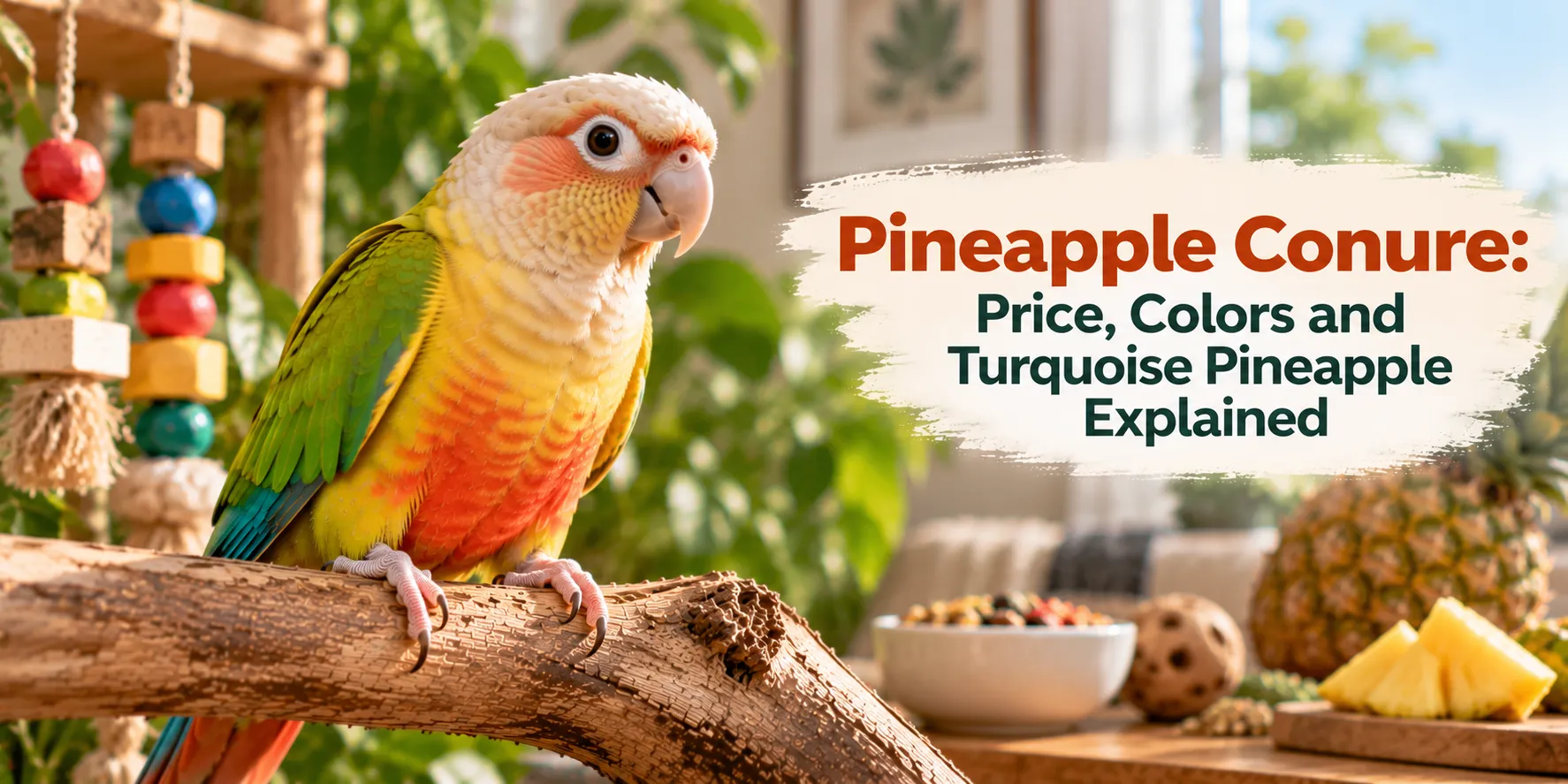
Say the word Pineapple to a conure fan and they know exactly what you mean: a Green Cheek with a glowing yellow belly, a warm soft green back and a gentle, almost sunny look. It is one of the most popular color combinations in the whole parrot hobby. If you have been searching for the Pineapple Conure price or wondering what a Turquoise Pineapple is, this guide explains the colors, the cost and what actually makes one different from any other Green Cheek.
Ready to bring home a Pineapple Conure? See our current Pineapple Conure for sale at Morphnests — hand-raised, DNA-sexed, and health-tested.
What is a Pineapple Conure?
A Pineapple Conure is not a separate species. It is a Green Cheek Conure (Pyrrhura molinae) that carries two color mutations at once: Yellow Sided and Cinnamon. Yellow Sided replaces some of the green on the belly and sides with bright yellow, while Cinnamon softens the overall color, so the dark head lightens and the green warms up. Together they create the Pineapple look. For the full list of Green Cheek mutations, see our Green Cheek Conure colors and mutations guide.
What does a Pineapple Conure look like?
-
Head: lighter, softer brown than the dark head of a Normal
-
Back and wings: a soft lime green
-
Chest and belly: bright yellow, often with a patch of orange red on the lower belly
-
Tail: a softer, paler red than the deep maroon of a Normal
-
Eye ring: white, as in every Green Cheek
Every Pineapple is a little different, and the amount of yellow and the shade of the green vary from bird to bird.
What is a Turquoise Pineapple Conure?
A Turquoise Pineapple adds a third mutation, Turquoise, to the Yellow Sided and Cinnamon combination. Turquoise shifts the green areas toward a blue green shade, so the back and wings take on a cool teal tone while the belly stays yellow. It is rarer than a standard Pineapple, which is why it costs more.
How much does a Pineapple Conure cost?
A hand raised Pineapple Conure costs $425 to $700 in the US in 2026, and a Turquoise Pineapple costs about $650 to $1,000. For every other conure and color, see our conure price guide.
| Green Cheek Color | What It Looks Like | Price 2026 |
|---|---|---|
| Normal | Wild type green with maroon tail | $275 to $500 |
| Pineapple | Soft green back, bright yellow belly | $425 to $700 |
| Turquoise | Blue green body | $500 to $800 |
| Turquoise Pineapple | Teal back, yellow belly | $650 to $1,000 |
| Suncheek | Warm yellow and orange tones | $600 to $900 |
| Moon Cheek | Pale pastel with blue tail | $600 to $1,200 |
Curious about the rarest combination in the family? Read our full guide to the Moon Cheek Conure.
Does color change a Pineapple’s personality?
No. A Pineapple Conure is every bit as cuddly, playful and quiet as a Normal Green Cheek. It is the same species with the same temperament. Choose a Pineapple because you love the look, not because you expect different behavior. See our Green Cheek Conure noise level breakdown for what to expect from the volume.
Pineapple Conure care basics
Cage. At least 24 by 24 by 36 inches, larger if possible.
Diet. About 60 to 70 percent quality pellet, 20 to 30 percent fresh vegetables and some fruit, with seeds and nuts as treats.
Out of cage time. At least 2 to 3 hours of daily interaction.
Enrichment. Foraging toys, shreddable items, and a snuggle hut. Green Cheeks love to burrow and sleep in cozy spaces.
Sleep. 10 to 12 hours of quiet, dark sleep.
Is a Pineapple Conure a good first parrot?
Yes, for the same reasons that any Green Cheek is a good first parrot. Pineapples are small, affectionate, playful and quieter than most conures, and they adapt well to apartment living when their daily needs are met. The main requirements are time and consistency: a couple of hours of daily interaction, a steady routine and a safe room to explore. If you can offer those, a Pineapple is a joyful, entertaining first companion.
Handling and bonding tips
-
Start with short sessions and let the bird come to your hand rather than reaching in.
-
Use a favorite treat, such as a small piece of fruit or a pellet, to reward step up.
-
Offer a snuggle hut or soft sleeping tent in the cage, since Green Cheeks love to burrow.
-
Keep the routine predictable, with food, play and sleep at similar times every day.
-
Let the bird ride on your shoulder or inside a shirt for gentle contact once it trusts you.
Pineapple color names you may see in listings
Because color names are not standardized, you may see several terms that describe the same or similar birds. Pineapple usually means Yellow Sided plus Cinnamon. Turquoise Pineapple adds the Turquoise mutation. Some listings also use phrases like cinnamon yellow sided to describe a Pineapple, and cinnamon turquoise for a different combination that does not include the Yellow Sided mutation. When in doubt, ask the breeder to name the mutations in plain terms and to show photos of the actual bird and its parents.
How is a Pineapple Conure produced?
Pineapples come from pairings in which both Yellow Sided and Cinnamon genes are present, and breeders plan those pairings across generations to bring both traits together in the same chick. Because each trait has to line up, a Pineapple takes more planning than a Normal, which is part of why the price is higher. A breeder can explain the exact odds for a specific pair, and a good one will happily tell you what the parents carry.
Pineapple vs Suncheek: are they the same?
No, although people often mix them up because both are warm, bright Green Cheek colors. A Pineapple keeps a soft green back with a yellow belly, while the Suncheek leans toward yellow and orange tones across more of the body. If you are comparing both, our guides to the Moon Cheek Conure and the Green Cheek Conure colors and mutations lay out how each combination differs.
Do Pineapple Conures change color as they grow?
Young Green Cheeks often look slightly duller than adults, and the full depth of color usually shows after the first molt. A baby Pineapple may look paler than it will at a year old, so ask for photos of the parents to see what the finished bird is likely to look like.
Buying checklist for a Pineapple Conure
-
Confirm the bird is fully weaned and eating a varied diet.
-
Ask whether DNA sexing and disease testing have been done.
-
Request recent photos and video of the exact bird.
-
Ask what the bird is eating now so you can keep its food consistent.
-
Make sure you have a cage of at least 24 by 24 by 36 inches ready before it arrives.
What does a Pineapple Conure cost to keep?
-
Cage: $250 to $600
-
Perches, bowls and toys: $100 to $250
-
Food in the first year: $300 to $500
-
Avian vet in the first year: $200 to $500
-
Monthly cost after setup: about $40 to $100
How long do Pineapple Conures live?
20 to 30 years with good care, the same as every Green Cheek color. See our parrot lifespan chart for the full comparison.
Should you choose a Pineapple?
Choose a Pineapple if you want a bright, warm, eye catching Green Cheek without paying for the very rarest mutations.
Choose a Normal if you want the lowest price, or a Turquoise Pineapple or Moon Cheek if you want something rarer and can wait for availability.
Where to buy a Pineapple Conure
At Morphnests we hand raise Green Cheek Conures in several color mutations. See the Green Cheek Conure product page, browse the conures category page, check the new born babies page, or contact Mo directly about a Pineapple or Turquoise Pineapple. Local buyers in Southern California can visit the aviary, and Texas buyers can have a bird shipped safely nationwide.
Frequently asked questions
What is a Pineapple Conure?
It is a Green Cheek Conure carrying both the Yellow Sided and Cinnamon mutations, which gives it a soft lime green back and a bright yellow belly.
How much does a Pineapple Conure cost?
$425 to $700 for a hand raised baby in the US in 2026, and about $650 to $1,000 for a Turquoise Pineapple.
Is a Pineapple Conure a different species?
No. It is the same species as every Green Cheek Conure, just with a combination of color mutations.
Is a Pineapple Conure the same as a Suncheek?
No. They are different color combinations of the same species. See our Moon Cheek and Green Cheek colors guides for how they differ.
Are Pineapple Conures louder than other Green Cheeks?
No. Color does not change noise level, so a Pineapple is as quiet as any Green Cheek.
How long do Pineapple Conures live?
20 to 30 years with good care, the same as every Green Cheek color.