Parrot Proofing Checklist: Best 2026 Home Safety Guide
Updated November 2, 2026
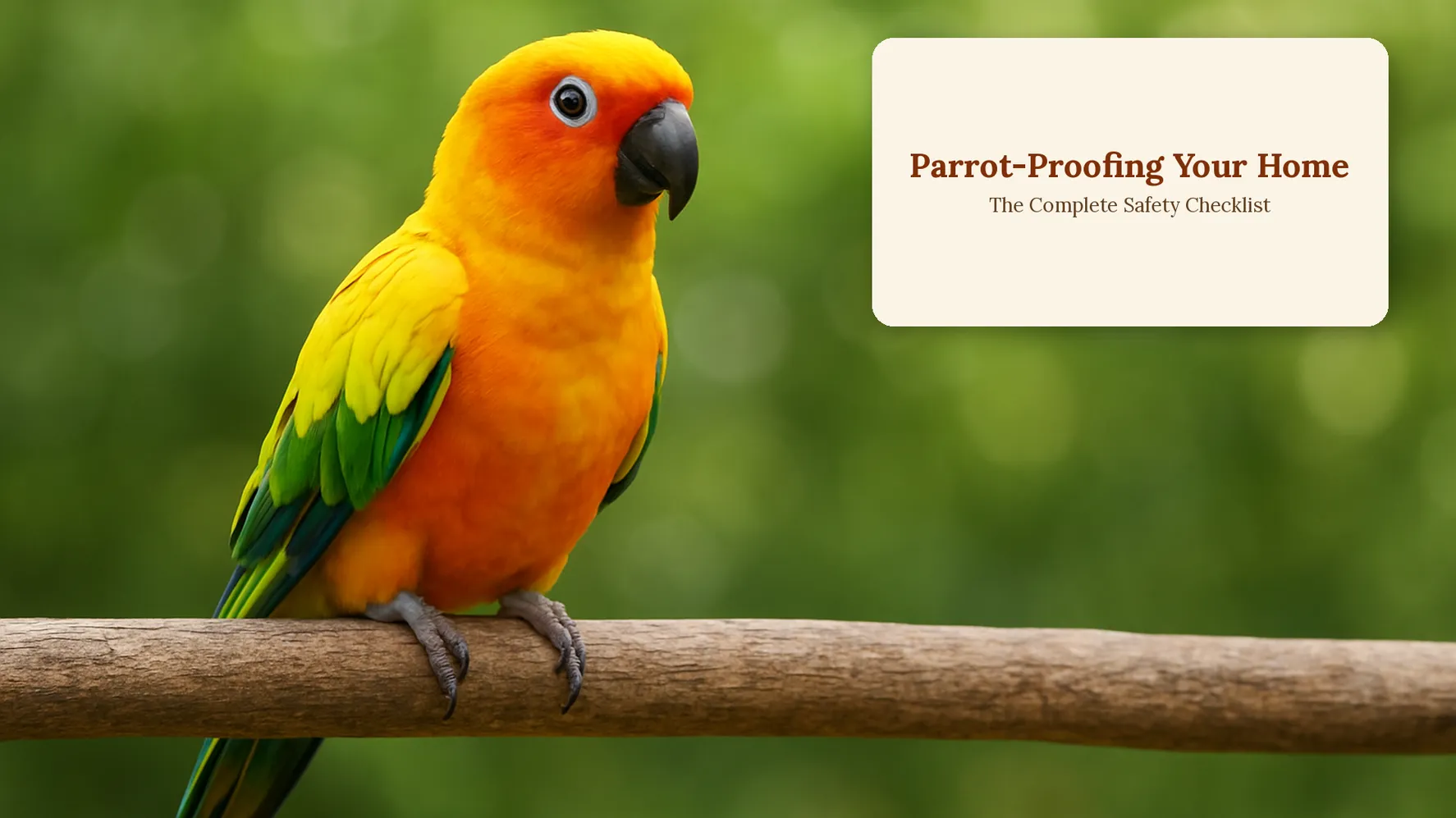
Bringing a parrot into your life means looking at your house the way a curious, beak-first toddler would. A solid parrot proofing checklist is the difference between a home that’s merely tidy and one that’s actually safe for a bird who will chew, climb, and investigate everything within reach. This guide walks through every room, every hazard, and every fix, so you can bird-proof your home with confidence before — or even years after — your parrot moves in.
Table of Contents
-
Final Parrot Proofing Checklist Before Bringing Your Bird Home
-
What is the most important item on a parrot proofing checklist?
Unlike a dog or cat, a parrot can fly, chew through wiring, and absorb airborne toxins through an extremely sensitive respiratory system. That means a parrot proofing checklist has to cover more ground than typical pet-proofing advice: fumes, open water, unsecured windows, and toxic plants all make the list. We’ll go room by room, then wrap up with a fast-reference summary you can print and keep handy.
Why a Parrot Proofing Checklist Matters
Parrots are prey animals with extremely efficient lungs — air flows through them in a one-way loop rather than filling and emptying like ours. That efficiency is what makes them so vulnerable. Fumes that barely register with you can cause fatal respiratory distress in a bird within minutes. This is the single biggest reason a dedicated parrot proofing checklist exists separate from generic “pet safety” advice.
Beyond airborne toxins, parrots are powerful chewers with curious beaks and strong feet built for climbing and manipulating objects. A parrot proofing checklist also has to account for electrical cords, small swallowable parts, and anything that can be chewed into sharp or toxic fragments.
Kitchen Parrot Proofing Checklist: The Most Dangerous Room
The kitchen tops every parrot proofing checklist because it combines two of the biggest bird killers in a single room: non-stick cookware fumes and open flames or hot surfaces.
PTFE (Teflon) Fumes
Non-stick cookware coated in PTFE releases odorless fumes when overheated — especially on an empty pan left on a hot burner. These fumes cause what’s known as “Teflon toxicosis,” which is often fatal to birds within minutes, with no warning signs beforehand. The fix is simple: replace non-stick pans with stainless steel or cast iron, and never run a self-cleaning oven cycle with a bird anywhere in the house.
-
Swap non-stick pans, griddles, and bakeware for stainless steel, cast iron, or ceramic-coated alternatives.
-
Never preheat an empty non-stick pan.
-
Keep your bird’s cage out of the kitchen entirely, ideally in a separate room with the door closed while cooking.
-
Run the exhaust fan and crack a window whenever you cook, even with safe cookware.
-
Avoid aerosol cooking sprays near the bird’s airspace.
Living Room and Common Area Hazards
Once the kitchen is handled, the next stop on any parrot proofing checklist is wherever your bird spends the most supervised time outside the cage. Ceiling fans, candles, and unsecured cords are the top three hazards here.
A ceiling fan left running during out-of-cage time is one of the most common causes of serious parrot injury. Turn fans off entirely before letting your bird fly free, not just slow them down. Scented candles, wax melts, and plug-in air fresheners release the same kind of airborne irritants that make the kitchen risky, so keep them out of any room your parrot uses.
Electrical cords deserve their own line item. A bored parrot will happily chew through a phone charger or lamp cord, risking both electrocution and a mouth burn. Route cords through protective sleeves or behind furniture, and unplug anything your bird can reach when unsupervised.
Windows, Doors, and Escape-Proofing
An open window or door is how most pet parrots go missing, and it belongs near the top of every parrot proofing checklist. Birds can slip out faster than you’d expect, and an indoor-raised parrot has almost no survival skills outdoors.
-
Install secure screens on every window that opens, and check them for gaps or tears regularly.
-
Establish a “two-door rule” — close the bird’s room door before opening any exterior door.
-
Keep your parrot’s wings appropriately trimmed if you want an extra layer of security (ask your avian vet about the right level for your bird and lifestyle).
-
Cover large, unobstructed windows or glass doors with film or blinds — birds don’t always perceive glass as solid and can injure themselves flying into it.
-
Microchip your bird or band it with up-to-date contact information in case of an escape.
Toxic Plants and Household Chemicals
Houseplants are a frequent blind spot on a parrot proofing checklist because they look harmless. Avocado, philodendron, dieffenbachia, oleander, and lily species are all toxic to birds in varying degrees, and a parrot that likes to nibble leaves won’t know the difference. Before bringing a bird into a plant-filled home, cross-check every plant you own against a trusted toxicity list, such as the ASPCA’s toxic and non-toxic plant database.
Cleaning products, scented sprays, mothballs, and even some essential oil diffusers belong on the same list. Store them in closed cabinets away from the bird’s flight path, and ventilate thoroughly after using any of them.
Other Pets and Open Water
Dogs and cats are natural predators to a parrot, even well-behaved ones, and supervised introductions should never mean unsupervised access. Keep a secure, separate space for your bird whenever other pets are loose in the house, and never leave them alone together regardless of how calm your other pet seems.
Open water — a full sink, an uncovered toilet, a bathtub, or even a large glass of water —is a drowning risk for a bird that lands on the rim and loses its footing. Keep toilet lids down and sinks drained when your parrot is out of its cage.
Common Mistakes When Bird-Proofing Your Home
Even conscientious owners miss a few things the first time around. These are the slip-ups that show up again and again:
-
Assuming “unscented” means safe. Many “unscented” cleaning sprays and air fresheners still contain volatile compounds that irritate a bird’s respiratory system even without a noticeable smell to you.
-
Forgetting the garage and laundry room. Paint, solvents, dryer sheets, and mothballs often live in these spaces and get overlooked because the bird “never goes in there” — until a door is left open.
-
Treating wing trims as a substitute for screens. A trimmed bird can still glide far enough to go through an open door or window, especially outdoors with a breeze. Trims reduce risk; they don’t replace secure screens.
-
One-time effort instead of an ongoing habit. New candles, holiday plants, and guests’ bags (gum, medication, lotion) reintroduce hazards long after the initial proofing pass.
Room-by-Room Parrot Proofing Checklist
| Room | Main Hazard | Fix |
|---|---|---|
| Kitchen | PTFE fumes, open flames, hot surfaces | Non-stick-free cookware, bird out of the room while cooking |
| Living Room | Ceiling fans, candles, cords | Fans off, candles out, cords covered |
| Bedroom | Closed doors/windows, small objects | Screens checked, floor cleared of chewable items |
| Bathroom | Open water, cleaning chemicals | Lids down, cabinets closed, door kept shut |
| Anywhere with plants | Toxic houseplants | Cross-check against an ASPCA-style plant list |
Daily and Weekly Parrot-Proofing Habits
A parrot proofing checklist isn’t a one-time project — it’s a set of habits. Build these into your routine so the work you put in on day one keeps paying off:
-
Scan the floor and any out-of-cage area for dropped food, small objects, or loose wires each morning.
-
Check window and door screens weekly for gaps.
-
Re-verify cookware and candles haven’t crept back into bird-accessible rooms.
-
Walk through new purchases — plants, air fresheners, decor — against your toxicity list before they enter the house.
-
Review your parrot proofing checklist seasonally, since holiday decorations, new candles, and houseguests all introduce new risks.
Final Parrot Proofing Checklist Before Bringing Your Bird Home
If you only have time for a quick pass, hit these non-negotiables from the parrot proofing checklist before your bird’s first day home:
-
All non-stick cookware removed or replaced
-
Ceiling fans off during out-of-cage time
-
Window and door screens secured, two-door rule in place
-
Toxic plants identified and removed or relocated
-
Cords covered or out of reach
-
Cleaning products and candles stored away from bird spaces
-
Toilet lids down, sinks drained
-
Other pets kept separate during unsupervised time
For everything else you’ll want in place before the bird itself arrives — cage setup, placement, and the first week — see our full guide on preparing your home before bringing a baby parrot home. And since diet is just as important as environment, keep our list of foods toxic to parrots on hand for the kitchen side of things.
Frequently Asked Questions
What is the most important item on a parrot proofing checklist?
Removing non-stick (PTFE) cookware and keeping the bird out of the kitchen while cooking is the single highest-priority item, since Teflon fumes are fatal within minutes and give almost no warning signs.
How often should I redo my parrot proofing checklist?
Walk through your parrot proofing checklist seasonally, and anytime you bring new plants, candles, or furniture into the house, since any of these can quietly reintroduce a hazard you already addressed.
Is bird-proofing different from puppy-proofing?
Yes. A parrot proofing checklist has to account for airborne toxins and escape risk through open windows and doors — hazards that barely register on a typical puppy-proofing list but can be fatal to a bird within minutes or result in a permanent escape.