Lutino Peach-Faced Lovebird For Sale: Best 2026 Guide
Updated October 30, 2026
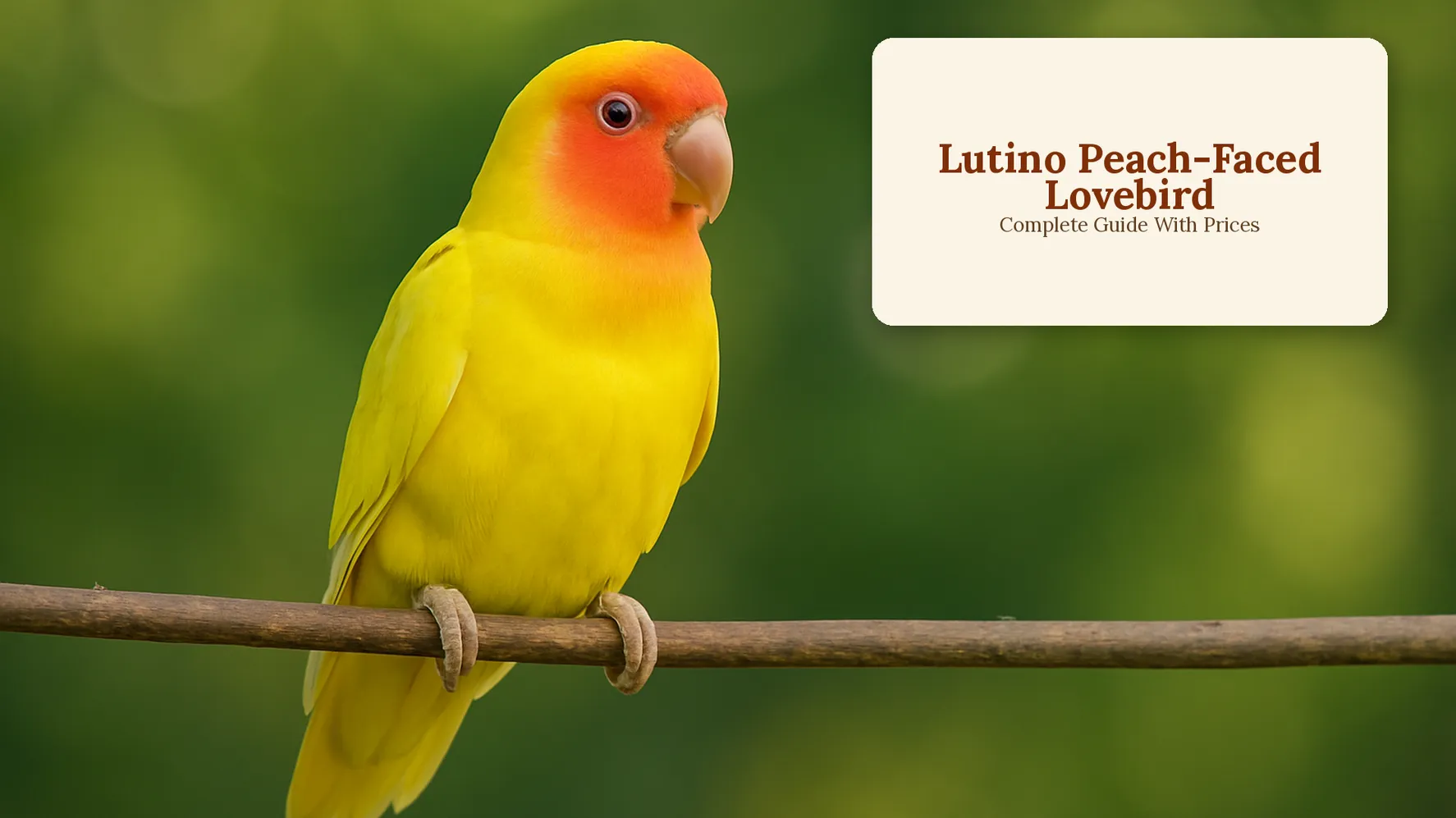
If you have been hunting for a lutino peach-faced lovebird for sale, you have landed on one of the most eye-catching color mutations in the entire lovebird world. A lutino peach-faced lovebird trades the wild type’s green body for a solid, sunshine yellow coat while keeping the species’ trademark peachy-orange face, and the result is a small parrot that looks like it was dipped in gold.
Table of Contents
At Morphnests we breed and hand-raise these lovebirds ourselves, so this guide covers exactly what you are paying for, what the bird should look like, how it is sexed, and what to check before you commit to bringing one home.
What Is a Lutino Peach-Faced Lovebird?
The lutino peach-faced lovebird is a color mutation of the peach-faced lovebird (Agapornis roseicollis), also called the rosy-faced lovebird, which is native to the dry woodlands and desert edges of southwestern Africa. “Lutino” refers to an ino-type mutation that removes the dark melanin pigment from the feathers while leaving the yellow and red carotenoid pigments untouched.
The lutino gene in lovebirds is sex-linked and recessive, which is why lutino hens tend to be more common and more affordable to produce than lutino males, and why a reputable breeder should be able to tell you the genetic background of the parent birds.
Because the mutation only strips out melanin, every lutino peach-faced lovebird still carries the normal peach-faced lovebird’s size, personality, and care needs. You are not buying a different species when you buy a lutino peach-faced lovebird for sale, just a different-colored version of the same energetic, affectionate little parrot.
Lutino Peach-Faced Lovebird Appearance and Markings
A correctly marked lutino peach-faced lovebird should show these features:
-
An entirely bright, solid yellow body, wings, and tail, with no green or grey feathers anywhere
-
A vivid peach-to-reddish-orange face, forehead, and throat, exactly like the wild-type peach-faced lovebird
-
Red to ruby-colored eyes, since the mutation that removes melanin also removes the dark pigment from the iris
-
A pale, rose-to-horn colored beak
-
No white eye-ring, which is a feature of Fischer’s and masked lovebirds, not peach-faced lovebirds
Chicks hatch with pale pink skin and sparse yellow down, and the full yellow and peach adult coloring fills in over the first few months as the juvenile feathers molt out. If you are comparing a lutino against other lovebird colors before you decide, our lovebird colors and mutations guide breaks down how lutino compares to Dutch blue, cinnamon, pied, and other mutations side by side.
Lutino Peach-Faced Lovebird Personality and Temperament
Lovebirds earned their name from the way bonded pairs sit pressed together and preen each other for hours, and a lutino peach-faced lovebird is no exception. They are curious, busy, and surprisingly bold for a bird that weighs about 50 grams. Hand-raised lutino peach-faced lovebirds typically bond hard to their primary caregiver and can become possessive of that person, so early, consistent handling and socialization matter more with lovebirds than with many larger, more even-tempered parrot species.
They are also vocal. A single lutino peach-faced lovebird will chirp and chatter through the day, and while they are not screamers on the scale of a conure or an Amazon, their calls are sharp and carry. Anyone considering a lutino peach-faced lovebird for sale should be comfortable with a small bird that has a surprisingly big voice.
Because a lutino peach-faced lovebird bonds so strongly to one person, early socialization during the first weeks at home sets the tone for years. Short, calm handling sessions several times a day, paired with hand-feeding treats, help a young lutino peach-faced lovebird grow into a confident, easy-to-handle adult rather than a one-person bird that bites everyone else.
How Much Does a Lutino Peach-Faced Lovebird Cost?
Pricing for any peach-faced lovebird mutation depends on the bird’s age, whether it is hand-fed and tame, its DNA-confirmed sex, and the breeder’s health guarantee. Here is the general 2026 US market range for the most common mutations, lutino included:
| Mutation | Typical Price Range |
|---|---|
| Green Normal (wild type) | $80 to $180 |
| Lutino (yellow body, red eyes) | $150 to $280 |
| Dutch Blue | $150 to $280 |
| Pied | $150 to $250 |
| Violet | $250 to $400 |
Our own hand-raised lutino peach-faced lovebird is priced at $149.99, which sits at the entry point of the typical national range for this mutation. A lutino peach-faced lovebird for sale at a noticeably lower price is worth asking hard questions about, since it often signals an unweaned chick, an unhanded bird, or a seller skipping DNA sexing and basic vet screening altogether.
DNA Sexing and Breeding Background
Because lutino is a sex-linked recessive mutation, breeding outcomes depend heavily on whether the hen, the cock, or both parents carry the gene, and visual inspection alone cannot reliably sex a lovebird. A trustworthy source selling a lutino peach-faced lovebird for sale should offer, or already have performed, DNA sexing so you know definitively whether you are bringing home a male or a female.
This matters if you ever plan to pair the bird for breeding, and it also helps with naming, nest-box planning, and understanding normal hormonal behavior as the bird matures.
Ask any breeder these questions before you buy:
-
Has the bird been DNA sexed, and can you see the lab result?
-
Is the bird weaned and eating independently, or still being hand-fed?
-
Has the bird had a basic avian vet check or at minimum a visual health screening?
-
What is the hatch date, and how old is the bird right now?
-
Does the breeder offer any kind of health guarantee after purchase?
-
Can you see photos or video of the actual bird you would be bringing home, not just a stock photo of the mutation?
Lutino Peach-Faced Lovebird Care Basics
Caring for a lutino peach-faced lovebird for sale once it arrives home is identical to caring for any peach-faced lovebird, since color mutations do not change a bird’s underlying biology. A few essentials:
-
Lifespan: 10 to 15 years is typical in a well cared for pet lovebird, with some individuals living into their twenties.
-
Diet: A quality pelleted diet supplemented with fresh vegetables, a small amount of fruit, and limited seed treats. Avocado, chocolate, caffeine, and onion are toxic and should never be offered.
-
Housing: The largest cage you can reasonably fit, at minimum around 24 by 24 inches, with bar spacing no wider than half an inch so a curious lovebird cannot squeeze its head through.
-
Enrichment: Daily time out of the cage, chewable wood toys, foraging opportunities, and at least an hour of direct interaction if the bird is kept singly.
-
Social needs: A single, hand-raised lutino peach-faced lovebird will bond closely to its owner and does not strictly require a second bird, but two lovebirds kept together will bond to each other instead of to people unless both are handled extensively from a young age.
Buying Checklist Before You Bring One Home
Before you finalize any purchase of a lutino peach-faced lovebird for sale, walk through this checklist:
-
Confirm the exact hatch date and current age of the bird
-
Confirm DNA sexing results, if sex matters to you
-
Ask what the bird currently eats and get a copy of the weaning diet so the transition at home is smooth
-
Set up a cage, perches, food, and water dishes before the bird arrives
-
Ask about the seller’s shipping and delivery process if you are buying from out of state
-
Have an avian vet identified in advance for a post-purchase wellness check
Lutino Peach-Faced Lovebird FAQ
Are lutino peach-faced lovebirds rare?
No. Lutino is one of the most widely bred and most popular peach-faced lovebird mutations, which is part of why it stays near the lower end of the mutation price range compared to rarer colors like violet or cinnamon-pied combinations.
Do lutino peach-faced lovebirds need a different diet than green lovebirds?
No. Diet is based on species, not color. A lutino peach-faced lovebird eats the same pellet-and-produce diet as any other peach-faced lovebird.
Can two lutino peach-faced lovebirds be paired together?
Yes, and pairing two lutinos will produce lutino offspring, since both the hen and cock would carry the gene. Pairing a lutino with a normal green bird produces split offspring that carry the gene without showing it, depending on which parent is lutino.
Why do lutino lovebirds have red eyes?
The same mutation that removes the dark melanin pigment from the feathers also removes it from the iris, which is why lutino and other ino-type mutations consistently show red to ruby-colored eyes instead of the dark brown-black eyes of a normal green lovebird.
Is a lutino peach-faced lovebird a good first bird?
Yes, for someone prepared for a small, vocal, high-energy parrot. They are an excellent size and price point for a first-time owner who wants a hands-on companion bird, as long as daily interaction and out-of-cage time are part of the plan.
How is a lutino peach-faced lovebird for sale shipped out of state?
Reputable breeders ship weaned, vet-screened birds via live animal air cargo rather than standard mail. At Morphnests, every lutino peach-faced lovebird we sell nationwide travels by Delta Cargo with the appropriate health documentation, and we coordinate pickup details with the buyer before the flight.
A lutino peach-faced lovebird brings striking color and a huge personality into a very small package. If you are ready to move forward, you can see availability, pricing, and photos of our current hand-raised lutino peach-faced lovebird for sale, or browse our full lovebird colors and mutations guide if you are still weighing which color is right for you. For more on lovebird genetics and the ino mutation group, see the Wikipedia entry on the lutino rosy-faced lovebird mutation.