How to Buy a Parrot Online: A Step by Step Guide From First Click to Delivery
Updated October 20, 2026
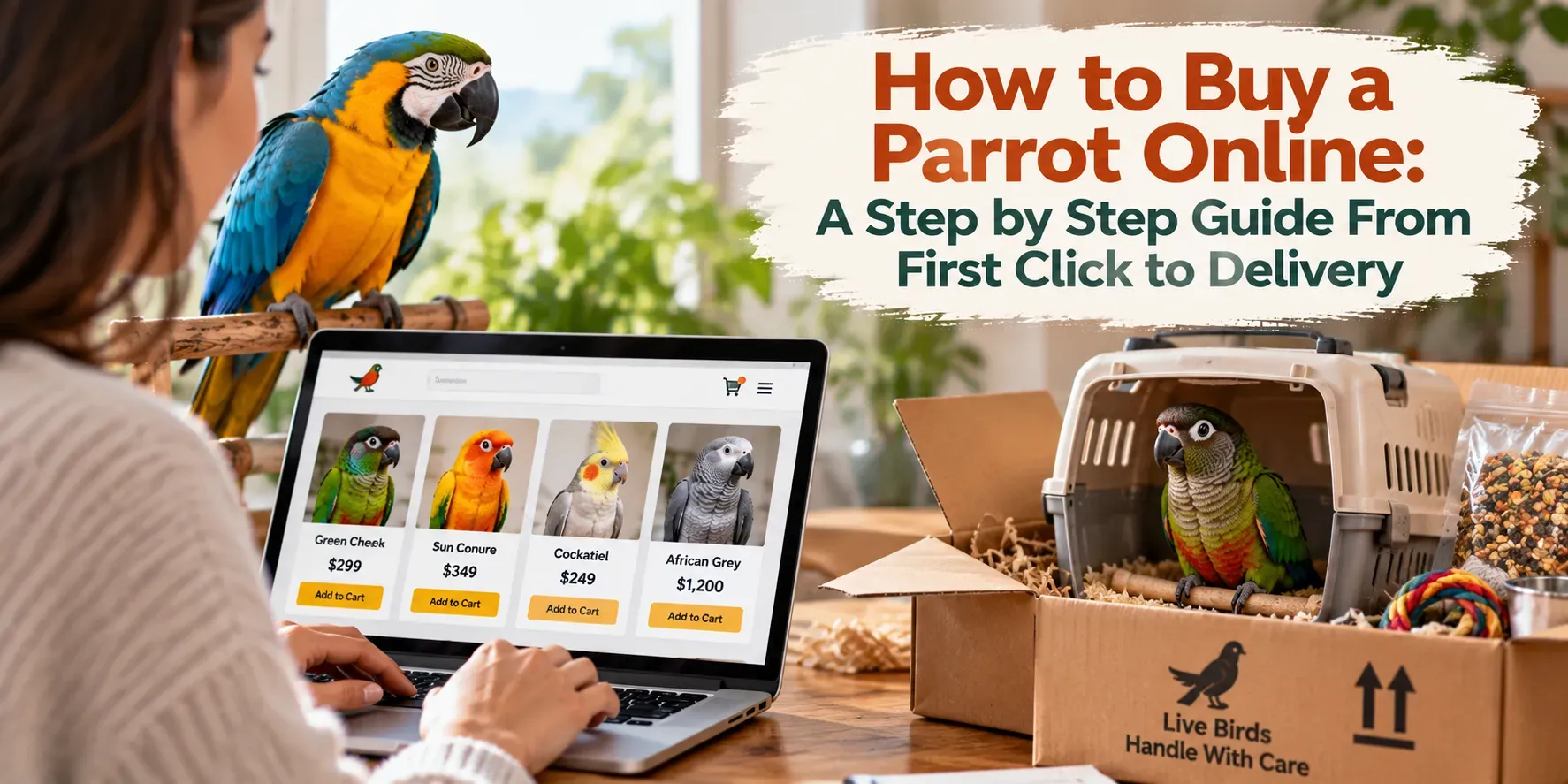
Searching for parrots for sale can feel overwhelming. There are dozens of species, a huge range of prices and plenty of questions about whether buying a living bird online is even a good idea. The good news is that it works very well when you know what to look for. Thousands of families bring home a hand raised parrot from a breeder hundreds or thousands of miles away, and the process is simple once you understand the steps. This guide walks you through every one, from choosing a species to the first night your new bird spends at home.
Parrots for sale: what you can buy and what it costs
Before you contact anyone, it helps to know where your budget lands. Here is a quick overview of the main groups of pet parrots and what hand raised babies cost in 2026. For the full breakdown of every species, read our complete parrot price guide.
| Group | Examples | Typical Price 2026 |
|---|---|---|
| Small and beginner friendly | Lovebirds, cockatiels, parrotlets | $80 to $700 |
| Conures | Green Cheek, Sun, Jenday | $275 to $1,200 |
| Medium parrots | Senegal, Pionus, Caique, Eclectus | $500 to $3,500 |
| Large talkers | Amazons, African Greys | $1,500 to $6,000 |
| Cockatoos and macaws | Goffin, Umbrella, Military, Blue and Gold | $800 to $30,000 |
You can browse everything that is currently listed in the shop, or see the newest babies on the new born babies page.
Step 1: Decide which parrot fits your life
The most expensive mistake in parrot buying is choosing a bird that does not fit your home. Before you look at colors and photos, answer three honest questions.
-
How much noise can you live with? Sun Conures, cockatoos and macaws are loud. Green Cheek Conures, Senegals and cockatiels are much quieter.
-
How many hours can you give every day? Small parrots need at least 2 hours. Cockatoos and large macaws need 4 or more.
-
How long can you commit? A lovebird lives 15 to 20 years, an African Grey 40 to 60 and a cockatoo up to 80.
If you are unsure, our guide to the easiest parrots for beginners and our parrot lifespan chart will help you narrow it down.
Step 2: Set a budget for the whole first year
The price of the bird is only the start. A cage, food, toys, perches and a first vet visit add real money, and they are best bought before the bird comes home. As a rough guide, the first year adds about $720 to $1,340 for a small parrot, $1,350 to $2,350 for a medium parrot and $2,450 to $4,000 for a large parrot, with giants like macaws and cockatoos costing more. Keep a small emergency fund as well, since an avian vet visit can be unexpected.
Step 3: Contact the aviary and ask good questions
A good breeder is happy to answer detailed questions, and you should ask them. Here is a short list to start with.
-
Is the bird hand raised and fully weaned, and what is it eating right now?
-
Has the bird been health tested, and can I see the results?
-
Is DNA sexing available for this bird?
-
What will the bird’s first week look like when it arrives?
-
Will you answer questions after the sale?
Mo answers these directly. You can contact Mo here or call (310) 901-6896.
How to compare parrot prices fairly
Two birds of the same species can have very different prices, and the number alone does not tell you which is the better buy. Compare what the price includes. Is the bird hand raised and fully weaned? Has it been disease tested? Is DNA sexing included or available? Does the seller stay in touch after the sale? A bird with all of those costs more to produce, and it is far more likely to become a healthy, friendly companion. A price that is much lower than the normal range for a species is usually a sign that something on that list is missing, so ask before you decide.
Buying close to home or from further away
Many buyers prefer to see a bird in person, and that is a great option if you live within driving distance of the aviary. If not, buying online works just as well when you can see the exact bird on video and the seller ships by a method built for live birds. Buyers in Southern California can arrange a visit, while buyers elsewhere, including Texas, rely on photos, video and overnight or airline delivery.
Step 4: Ask for photos and video of the exact bird
Do not settle for a stock photo. Ask for recent photos and a short video of the specific bird you are considering, showing it perched, eating and moving around. You are looking for bright eyes, smooth clean feathers, an alert posture and a bird that is comfortable around people. A short video call can also tell you a lot.
Step 5: Confirm the health and DNA paperwork
Reputable aviaries test their birds for the common serious diseases, such as psittacine beak and feather disease and polyomavirus, and offer DNA sexing so you know whether you have a male or a female. Every bird at Morphnests is hand raised and disease tested, and DNA sexing is available. Always ask to see the paperwork for the exact bird before you commit.
Step 6: Choose delivery or pickup
Mo ships to all 50 states using either USPS Priority Express overnight or Delta Cargo airline transport, and every box and heat pack is chosen with the bird’s safety first. The full process is explained on our shipping page. If you live near the aviary, you can also visit in person. Buyers in Southern California can arrange a visit, and buyers in Texas can read how delivery works to their major airports.
What does hand raised mean, and why does it matter?
A hand raised parrot is fed by people from the first weeks of life and handled every day. It learns that human hands mean food, safety and company, so it is tame and ready to bond when it arrives. A bird that was not hand raised can be shy or defensive and may take many months to trust you. For most families, hand raised is the single most important feature to look for.
Preparing your home before the bird arrives
-
Set up the cage in a quiet room with good light and no kitchen fumes.
-
Buy the same pellet the bird is already eating and plan to change foods slowly.
-
Add perches of different sizes, a few safe toys and a bowl for fresh vegetables.
-
Find an avian vet before you need one and book a wellness visit for the first weeks.
-
Remove hazards such as open water, aerosol sprays, candles and non stick cookware.
The first 48 hours after your bird arrives
Open the shipping box in a quiet room, let the bird step out on its own and offer water and food right away. Keep the room calm, speak softly and give the bird time to settle. Cover the cage at night for 10 to 12 hours of sleep. Do not worry if the bird is quiet or eats little on the first day, but contact the breeder if you have concerns.
Learn the early signs of illness in our guide to the warning signs your parrot is sick, so you know what to watch for in the first weeks.
Common buying mistakes to avoid
-
Choosing by color alone. Personality, noise and lifespan matter far more than feather color.
-
Buying on price alone. A bird that is far below normal market price may be missing health testing, hand raising or support.
-
Skipping the budget. Plan for the cage, food and vet before the bird, not after.
-
Forgetting the noise. A species that is too loud for your home is hard and expensive to fix later.
-
Not asking questions. A good seller welcomes them.
Ready to buy a parrot?
Browse the shop to see available birds, check the new born babies page for the newest arrivals, or contact Mo with your questions. With 200+ families across the country, Mo is happy to help you find the right bird.
Frequently asked questions
Is it safe to buy a parrot online?
Yes, when the aviary shows you the exact bird, shares photos and video, provides health and DNA paperwork and ships by a method built for live birds. Morphnests ships using USPS Priority Express overnight or Delta Cargo airline transport.
How much does a parrot cost?
Parrots cost from about $80 for a lovebird to $30,000 for a Hyacinth Macaw in 2026. Most popular pet parrots fall between $275 and $3,500.
Can I see the bird before I buy?
You can ask for current photos and video of the exact bird. If you live in Southern California you can also arrange a visit to the aviary.
How long does shipping take?
Birds travel overnight by USPS Priority Express or by Delta Cargo flight to your nearest hub airport. Ask Mo which method suits your bird and your location.
What should come with the bird?
Health testing results, DNA sexing if available, a record of what the bird eats, and a breeder who stays reachable after the sale.
What is the best parrot for a first time buyer?
Cockatiels, lovebirds and Green Cheek Conures are popular first birds because of their size, price and temperament.