Hawk Headed Parrot: The Red Fan Parrot Explained
Updated October 19, 2026
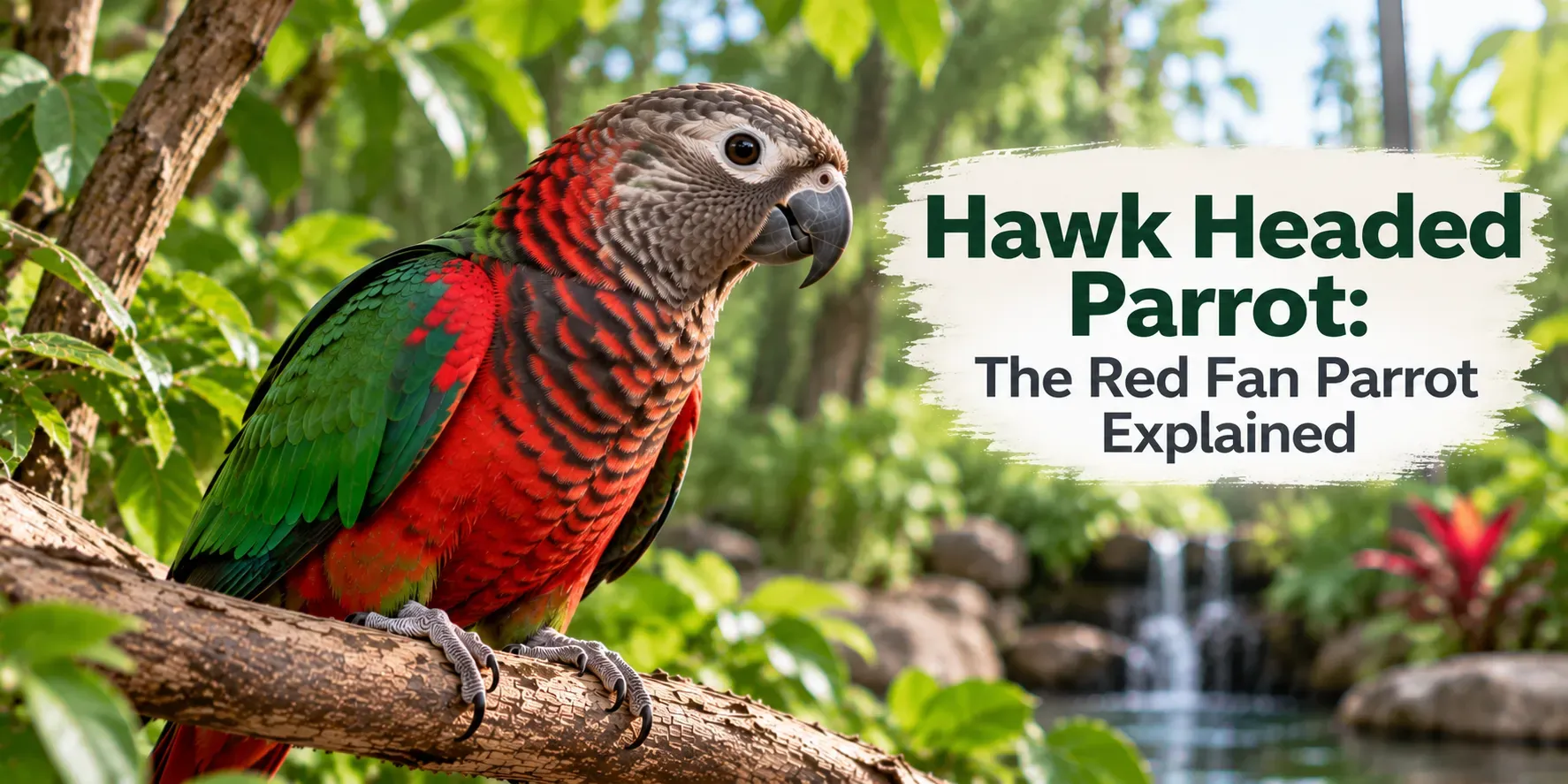
Some parrots are unforgettable the moment they react. The Hawk Headed Parrot looks like a fairly ordinary green and maroon bird until something excites it, and then the long feathers across the back of its head and neck lift into a wide, blue edged fan that frames the face like a crown. It is one of the most distinctive displays in the parrot world, and it comes with a personality to match. This guide covers what the species is like to live with, what it costs and whether it suits your home.
Ready to bring home a Hawk-Headed Parrot? See our current Hawk-Headed Parrot for sale at Morphnests — hand-raised, DNA-sexed, and health-tested.
What is a Hawk Headed Parrot?
The Hawk Headed Parrot (Deroptyus accipitrinus) is native to the rainforests of the Amazon basin in northern South America. It is the only species in its genus, so it has no close relatives among the more familiar Amazons, conures or caiques, although some of its calls resemble those of the Black Headed Caique. It is a mid sized parrot, about the length of a smaller Amazon but lighter in build.
What does a Hawk Headed Parrot look like?
-
Length: 12 to 14 inches
-
Weight: about 190 to 300 grams
-
Forehead and crown: pale cream to white with fine brown streaking
-
Throat and face: brown with white streaks
-
Nape fan: long maroon feathers edged in blue that can be raised into a ruff
-
Belly and breast: deep red with blue edging
-
Back, wings and tail: emerald green
-
Beak and eyes: dark beak with eyes ringed in a pale shade
Males and females look alike, so DNA sexing is the only way to know the sex of a bird.
Why do Hawk Headed Parrots fan their feathers?
The fan is a signal. A bird raises its nape feathers when it is excited, playing, frightened or feeling territorial, so the display is a way of reading mood. A fanned crest during play is a happy, energetic bird. A fanned crest with a hiss or lunge is a warning. Learning to tell the difference is the key to a good relationship with this species.
Personality and temperament
Keepers describe the Hawk Headed Parrot as playful, curious and endlessly entertaining, a clown that invents new games. It can be deeply affectionate with its favorite person. It is also bold and can be territorial, hissing or nipping when it feels crowded or overstimulated. Consistent, calm handling and plenty of enrichment make a big difference. This is a bird that rewards an owner who enjoys a lively, expressive companion rather than one who wants a quiet lap bird.
Are Hawk Headed Parrots loud?
Yes. They produce a wide range of sounds, including high pitched contact calls, hisses, growls and persistent screaming. They are not an apartment species. If noise is a concern in your home, compare the species in our Green Cheek Conure noise level breakdown to see how quieter small parrots stack up.
Do Hawk Headed Parrots talk?
Many are good mimics. They can pick up words, phrases and household sounds, and they often learn them in the clear, expressive way that suits their theatrical personality. Talking ability varies from bird to bird, so treat any vocabulary as a bonus rather than a promise.
How much does a Hawk Headed Parrot cost?
Hand raised Hawk Headed Parrots cost $2,500 to $4,500 in the US in 2026. The price reflects the fact that the species is bred by relatively few aviaries and takes years to mature. Prices vary with age, availability and the bird’s documentation.
| Parrot | Length | Price 2026 |
|---|---|---|
| Caique | 9 inches | $1,200 to $2,500 |
| Pionus | 10 to 11 inches | $700 to $1,600 |
| Hawk Headed Parrot | 12 to 14 inches | $2,500 to $4,500 |
| Amazon Parrot (most species) | 13 to 16 inches | $1,500 to $3,500 |
| Eclectus Parrot | 14 to 15 inches | $1,800 to $3,500 |
Care requirements
Cage. Minimum 36 by 24 by 48 inches, larger if possible. The fan display needs room, and these are active birds.
Diet. About 60 to 70 percent quality pellet, 20 to 30 percent fresh vegetables and limited fruit, and small amounts of nuts as treats.
Out of cage time. At least 3 hours daily. This species is energetic and does best with real social time.
Enrichment. Rotate foraging toys, chewable wood and shreddable items every week.
Sleep. 10 to 12 hours of quiet, dark sleep each night.
Training a Hawk Headed Parrot
This species is smart and learns fast, which cuts both ways. A Hawk Headed Parrot picks up good habits quickly when training is positive and consistent, and it picks up bad ones just as quickly. Short sessions of 5 to 10 minutes using a favorite treat work best. Teach step up, recall and target training early, and always reward calm behavior. Because the bird signals mood with its nape feathers, you can read how a session is going and stop before it becomes stressful. Never punish a fanned, hissing bird, because that teaches it to escalate rather than to relax.
Reading the warning signs to prevent bites
-
Fully fanned nape with pinned eyes: the bird is highly aroused, so give it space.
-
Hissing or growling: a clear request to back off.
-
Leaning away while gripping the perch: the bird is uncomfortable with the approach.
-
Relaxed fan with a playful bounce: a happy bird ready for a game.
The same principles apply to every parrot. Our guide on how to stop a parrot from biting walks through the full approach step by step.
Hawk Headed Parrot vs Amazon Parrot
Because the Hawk Headed Parrot is about the size of a small Amazon, buyers often compare the two. Amazons are more famous for talking and usually cost a little less, while the Hawk Headed offers a far more unusual look and a more theatrical personality. Both can be loud, and both are long lived. If the fan display is what draws you in, no Amazon will give you the same experience.
Enrichment ideas for a Hawk Headed Parrot
A smart, active parrot that fans its feathers at everything needs plenty to do. Rotate three or four toys every week, and include at least one foraging toy that makes the bird work for its food. Provide shreddable items like cardboard and palm leaves, safe wood to chew, and a play stand where the bird can climb and swing. Many Hawk Headed Parrots also enjoy bathing, so offer a shallow dish or a gentle misting a few times a week. Hiding treats in paper wrapped parcels turns mealtime into a game and burns off energy that might otherwise turn into screaming.
What to ask when you inquire
-
Is the bird fully weaned and eating a varied diet?
-
Has the bird been DNA sexed and disease tested?
-
How has the bird been socialized so far?
-
What diet is it eating now, so you can keep it consistent at home?
-
Can you see current photos and video of the exact bird?
How long do Hawk Headed Parrots live?
They can live 40 to 50 years or more with good care. Birds mature slowly, often taking 4 to 7 years to reach adulthood. See our parrot lifespan chart for the full comparison across species.
Is a Hawk Headed Parrot right for you?
Choose one if you want an expressive, entertaining parrot, you have detached housing, you can offer several hours of daily interaction and you already have some parrot experience.
If you want the personality without as much volume, our Pionus Parrot guide and Caique guide are worth a look, and our Amazon Parrot species comparison shows how other medium parrots compare.
Where to inquire about a Hawk Headed Parrot
Hawk Headed Parrots are not always in stock, so the best first step is a conversation. Browse the other parrots category, check the new born babies page, or contact Mo directly to ask about current availability. Buyers in Southern California can visit the aviary, and Texas buyers can have a bird shipped safely via Delta Cargo.
Frequently asked questions
How much does a Hawk Headed Parrot cost?
A hand raised Hawk Headed Parrot costs $2,500 to $4,500 in the US in 2026.
Why is it called a Hawk Headed Parrot?
Because the long nape feathers can be raised into a fan around the head, giving the bird a fierce, hawk like look. It is also known as the Red Fan Parrot.
Are Hawk Headed Parrots loud?
Yes. They have varied calls that include hisses, growls and loud screams, so they are best in detached housing.
Do Hawk Headed Parrots talk?
Many are good mimics and can learn words and sounds, though ability varies by bird.
How long do Hawk Headed Parrots live?
They can live 40 to 50 years or more with good care.
Are Hawk Headed Parrots good for beginners?
They are better suited to keepers who already have some parrot experience because of their volume, energy and bold temperament.