Double Yellow-Headed Amazon For Sale: Best 2026 Guide
Updated October 21, 2026
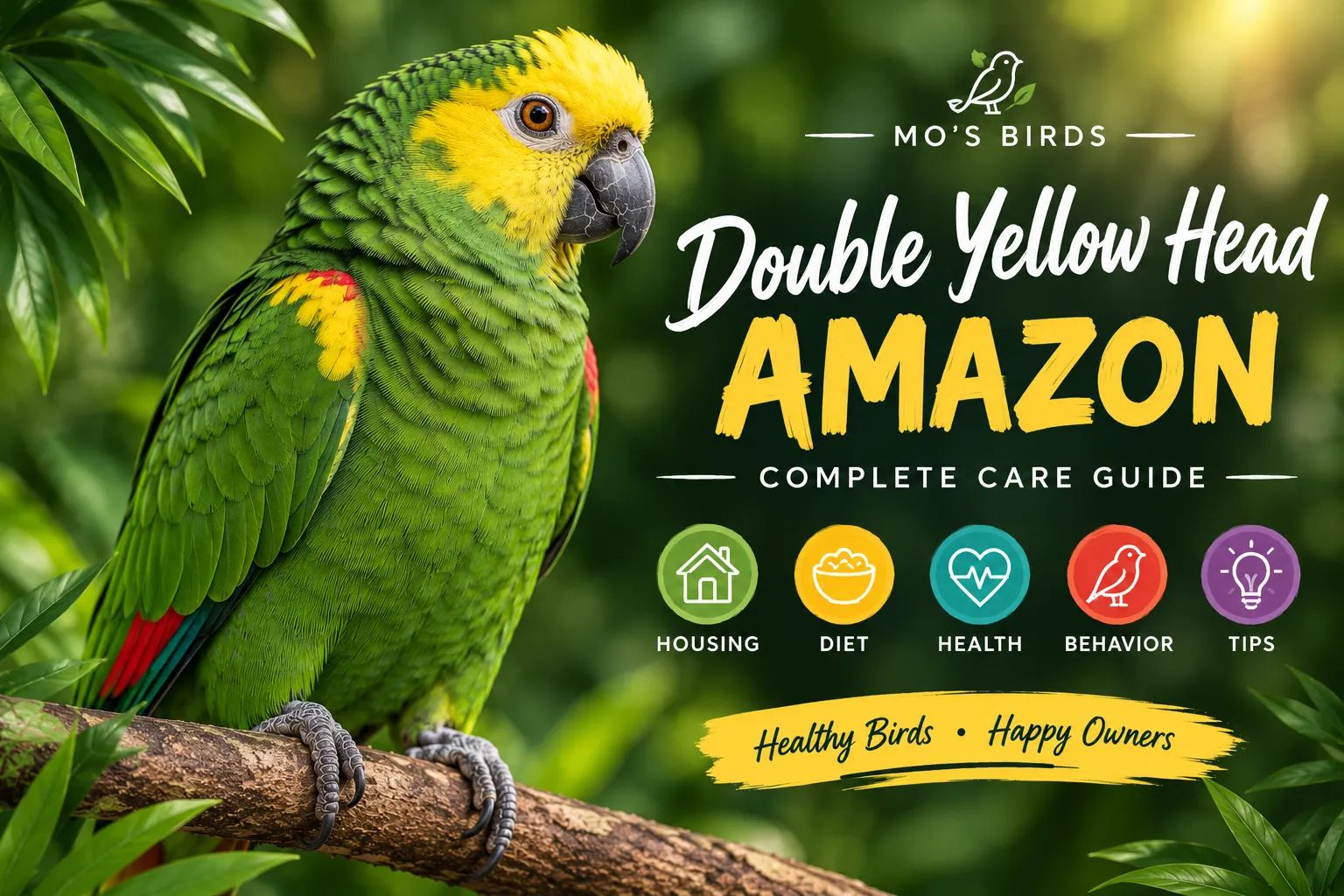
If you’re searching for a double yellow-headed Amazon for sale, you’re looking at one of the boldest, most talkative parrots in the hobby. The double yellow-headed Amazon (Amazona oratrix) is famous for its golden crown, its fearless personality, and a vocabulary that can rival a small child’s. Before you buy one, though, it helps to know exactly what you’re getting into.
This guide covers everything a first-time buyer needs: real markings and appearance, talking ability, what actually drives the price up or down, daily care, and how this species stacks up against other popular Amazon parrots.
What Is a Double Yellow-Headed Amazon?
The double yellow-headed Amazon is a subspecies of the yellow-headed parrot native to Mexico, prized in aviculture since the early 1900s for its intelligence and speaking skills. “Double yellow-headed” refers to the yellow covering both the crown and the nape of the head, which sets it apart from close relatives that only show yellow on the crown or face.
In the wild, this bird is listed as Endangered by the IUCN, largely due to habitat loss and decades of capture for the pet trade. Reputable breeders like Morphnests work exclusively with captive-bred, DNA-tested stock, which takes the pressure off wild populations while still giving families access to this remarkable companion bird.
Where This Species Comes From
The species originates along the Pacific coastal lowlands and river valleys of Mexico, favoring mangroves, gallery forest, and scrubby lowland woodland near water. Wild flocks forage for seeds, nuts, fruit, and blossoms, often traveling in pairs or small family groups outside of the breeding season.
Several regional populations have been described, each with slightly different amounts of yellow on the head, which is part of why written descriptions of “yellow-headed” Amazons can vary so much between sources. The birds bred and sold in the United States pet trade are almost always captive-born, many generations removed from any wild-caught ancestor.
Double Yellow-Headed Amazon Appearance and Markings
A mature double yellow-headed Amazon is a stocky, compact parrot, usually 14 to 17 inches long with a short, squared-off tail. The yellow on an adult bird covers the crown and nape, and it keeps spreading with every molt as the bird matures over several years.
The rest of the body is a deep, vivid green, with subtle dark scalloped edging along the neck feathers and solid yellow feathering at the thighs. Each wing shows a red patch at the bend, and the flight feathers run blackish to bluish-violet with an additional red patch on the outer secondaries.
At the base of the tail there’s a red patch that’s usually hidden until the bird fans its feathers, and the outer tail feathers carry yellowish tips. The beak is horn-colored and grayish, the eye ring is whitish-gray, and the eye itself is dark brown. Young birds hatch mostly green and don’t reach full adult coloring until they’re several years old.
Double Yellow-Headed Amazon Talking Ability and Temperament
This species is consistently ranked among the best-talking Amazon parrots, and many owners consider it one of the best talkers in the entire parrot world. A well-socialized double yellow-headed Amazon commonly builds a vocabulary of 100 words or more, and plenty go on to sing full songs or hold short “conversations” with their favorite humans.
Temperament-wise, expect a bold, extroverted, confident bird. Double yellow-headed Amazons are affectionate with their chosen people but can also be opinionated and a little stubborn, especially during hormonal periods in adolescence and early adulthood. Daily interaction and consistent, gentle training keep that boldness channeled into good behavior rather than biting or screaming.
Early, consistent training pays off for the life of the bird. Reward-based target training, short daily practice sessions, and plenty of supervised time out of the cage help a young bird grow into a confident, well-mannered adult instead of a nippy or territorial one. Most owners find the investment in training during the first year or two is what determines whether the next five decades together go smoothly.
-
Noise level: Loud. This is not a bird for noise-sensitive households or close apartment neighbors.
-
Talking ability: Exceptional; frequently cited as a top Amazon talker.
-
Lifespan: 50 to 60 years with proper care.
-
Size: 14 to 17 inches, stocky build.
-
Experience level: Best suited to intermediate-to-experienced bird owners.
Double Yellow-Headed Amazon For Sale: What Affects the Price
Prices for a double yellow-headed Amazon for sale typically run from the low thousands up to several thousand dollars, depending on the breeder, the bird’s age, and add-on services. At Morphnests, a hand-raised double yellow-headed Amazon from DNA-tested parents is currently listed at $2,399.99, with optional add-ons like a disease panel, DNA sexing, and a starter kit.
A few factors reliably move the price: whether the bird is hand-fed and well-socialized from a young age, whether the parents are DNA-tested and disease-screened, and how close the bird is to weaning. A fully weaned baby, typically ready around 16 to 20 weeks, commands a premium over an unweaned chick because the hardest, riskiest part of rearing is already done.
Be cautious of prices that seem far below market rate. A double yellow-headed Amazon priced unusually low is a red flag for poor socialization, undisclosed health issues, or birds sourced outside legitimate, DNA-tested breeding programs.
Double Yellow-Headed Amazon Care and Lifespan
Anyone considering a double yellow-headed Amazon for sale should plan their care routine before bringing the bird home, not after.
With proper care, a double yellow-headed Amazon for sale can live 50 to 60 years, which means buying one is a multi-decade commitment, not a short-term pet purchase. A spacious cage of at least 24 by 24 by 36 inches is the minimum for an adult bird, with daily out-of-cage time for exercise and mental stimulation.
Diet should center on a high-quality pelleted formula supplemented with fresh vegetables, leafy greens, and limited fruit, rather than a seed-only diet, which leads to obesity and nutritional deficiencies over time. Fresh water, regular bathing or misting, and rotating toys for foraging and chewing round out a healthy daily routine.
Because this species is so social and vocal, a double yellow-headed Amazon left alone for long stretches each day is prone to screaming, feather destructive behavior, and other stress responses. Plan for genuine daily interaction before bringing one home.
Good vegetables and fruits to rotate in include leafy greens, carrots, sweet potato, bell pepper, broccoli, apple, and berries, offered in small amounts alongside the pellet base. Avoid avocado, chocolate, caffeine, onion, and anything high in salt or sugar, all of which are unsafe or harmful for parrots.
Common Health Issues to Watch For
Before you buy a double yellow-headed Amazon for sale, it helps to know the common health issues. Like most Amazons, this species can be prone to obesity and fatty liver disease if fed too many seeds or fatty table foods over the years, so portion control matters as much as food quality. Respiratory issues can also show up if a home uses aerosol sprays, scented candles, or non-stick cookware that releases fumes, since parrot respiratory systems are extremely sensitive.
Routine signs of a healthy bird include bright, alert eyes, smooth and glossy feathering, a steady appetite, and normal droppings. Any sudden change in energy, appetite, breathing, or droppings is worth a same-week visit to an avian veterinarian rather than a wait-and-see approach.
Double Yellow-Headed Amazon vs. Other Popular Amazon Parrots
If you’re comparing Amazon species before deciding, here’s how the double yellow-headed Amazon stacks up against two other popular choices.
| Trait | Double Yellow-Headed Amazon | Blue-Fronted Amazon | Yellow-Naped Amazon |
|---|---|---|---|
| Size | 14-17 in | 15-16 in | 14-15 in |
| Talking ability | Exceptional | Very good | Exceptional |
| Noise level | High | Moderate-High | High |
| Typical lifespan | 50-60 years | 50-60 years | 50-60 years |
| Typical price range | ~$2,000-$2,500 | ~$1,800-$2,400 | ~$2,200-$2,800 |
All three make excellent companions for experienced owners, but if talking ability and a bold, outgoing personality top your list, the double yellow-headed Amazon is hard to beat. If you want a slightly calmer, more laid-back Amazon, our Blue-Fronted Amazon guide is worth a look too.
Preparing Your Home For a Double Yellow-Headed Amazon
-
Set up a cage at least 24x24x36 inches with multiple perch sizes to protect foot health.
-
Bird-proof the room: cover exposed wiring, remove toxic houseplants, and switch to bird-safe, non-stick-free cookware.
-
Stock a rotating supply of foraging toys, shreddable items, and chew-safe wood to satisfy natural chewing instincts.
-
Line up an avian veterinarian in your area before the bird arrives, not after a problem comes up.
-
Plan a consistent daily schedule for out-of-cage time, training, and social interaction.
Is a Double Yellow-Headed Amazon For Sale Right for You?
Choosing a double yellow-headed Amazon for sale rewards the right owner with decades of companionship, genuine conversation, and a personality big enough to fill a room. It’s not the right fit for quiet households, first-time bird owners who want something low-maintenance, or anyone unprepared for a 50-plus-year commitment.
If you’re ready for a loud, brilliant, affectionate parrot and want to see current availability, visit our double yellow-headed Amazon for sale listing for pricing and add-on options. For background on the species in the wild, see the Yellow-headed Amazon entry on Wikipedia.
Frequently Asked Questions
How much does one of these parrots cost? A double yellow-headed Amazon for sale typically runs somewhere in the $2,000 to $2,500 range from a reputable, DNA-tested breeder, with add-ons like disease screening or DNA sexing priced separately.
Are they good for first-time bird owners? Not usually. Their volume, intelligence, and strong personalities are easier to manage for someone who already has experience with large parrots.
How long do they live? With proper diet, housing, and veterinary care, 50 to 60 years is typical, so expect a companion that may outlive other long-term plans.