Crimson Bellied Conure: The Quiet, Gentle Cousin of the Green Cheek
Updated October 19, 2026
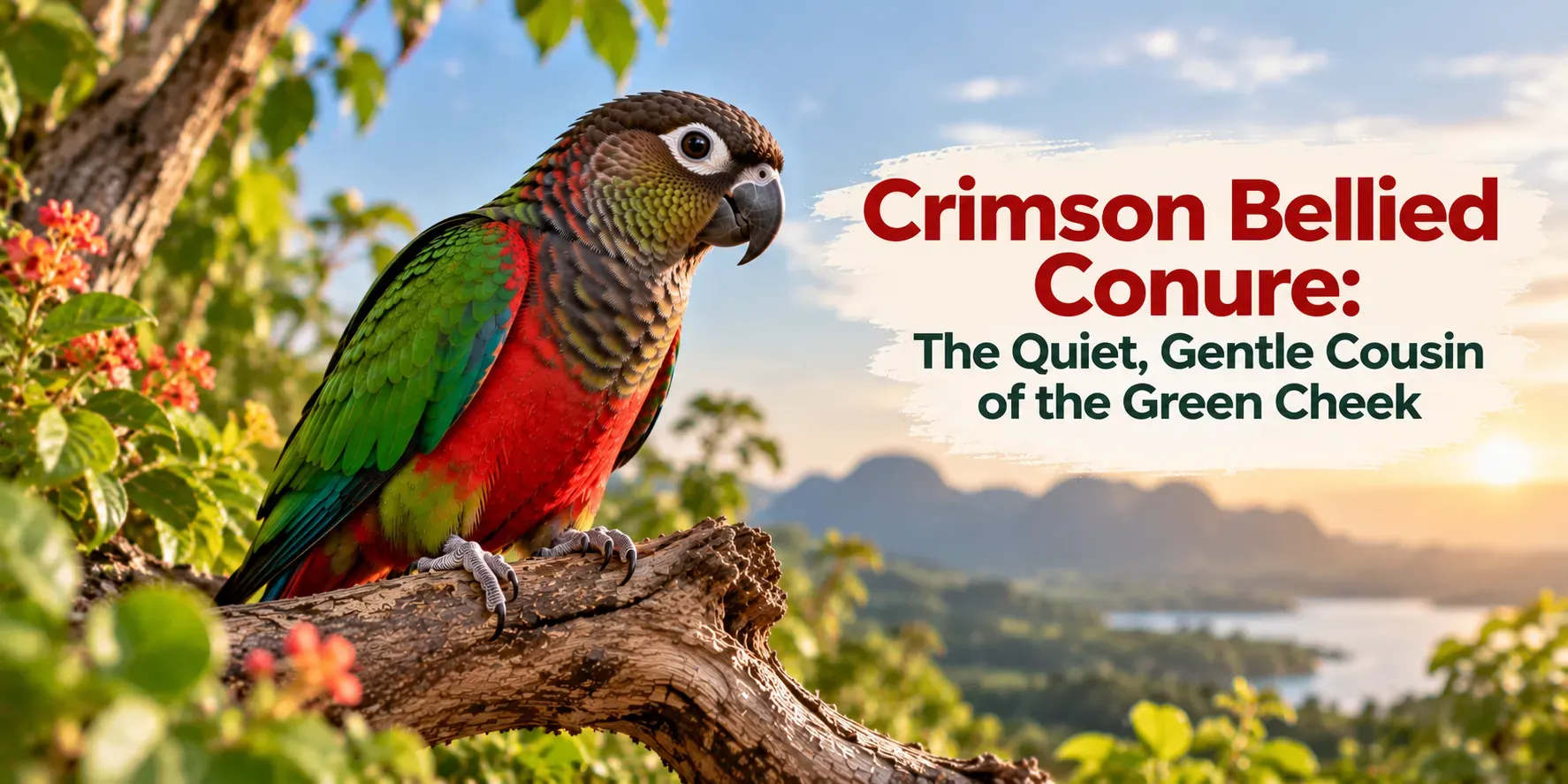
The Green Cheek Conure gets most of the attention, but it has a handsome relative that deserves a closer look. The Crimson Bellied Conure has the same compact size and playful spirit, with a different set of colors and a reputation for being a touch more laid back. If you love the idea of a small, quiet, affectionate conure but want something less common, this species may be exactly what you are looking for.
Ready to bring home a Crimson Bellied Conure? See our current Crimson Bellied Conure for sale at Morphnests — hand-raised, DNA-sexed, and health-tested.
What is a Crimson Bellied Conure?
The Crimson Bellied Conure (Pyrrhura perlata), also called the Crimson Bellied Parakeet, is native to the Amazon basin in Brazil. It belongs to the genus Pyrrhura, the same group as the Green Cheek, Maroon Bellied and Pearly Conures. Pyrrhura conures are generally smaller and quieter than the Aratinga conures such as the Sun and Jenday, and they tend to be gentle, sociable birds that bond closely with their people.
What does a Crimson Bellied Conure look like?
-
Length: about 9 to 10 inches
-
Belly: bright crimson red, the feature that gives the species its name
-
Chest: brown with pale cream scalloping
-
Cheeks: yellow green fading to blue lower down
-
Collar: a blue band around the back of the neck
-
Wings: green with blue flight feathers and red at the bend of the wing
-
Tail: brownish red
-
Eye ring: pale and featherless
Young birds look similar to adults but with duller coloring, which brightens as they mature.
Personality and temperament
Crimson Bellied Conures are lively and friendly, with the clownish energy that makes conures so popular, but many keepers describe them as a little more relaxed than a Green Cheek. They tend to be less bossy and less prone to dramatic hormonal phases, and many are not especially nippy. They still love head scratches, shoulder time and games, and they still need daily interaction to stay happy.
Are Crimson Bellied Conures loud?
No. Like other Pyrrhura conures they are in the quiet group, with softer calls than a Sun or Jenday Conure. They will call out when they feel ignored, so they are not silent, but they are generally suitable for homes where a Green Cheek would be. For a full volume comparison, see our Green Cheek Conure noise level breakdown.
Do Crimson Bellied Conures talk?
With time and patience they can learn a few words and short phrases, but talking ability is modest. Choose this species for its personality and calm company, not for its vocabulary.
How much does a Crimson Bellied Conure cost?
Hand raised Crimson Bellied Conures cost $500 to $900 in the US in 2026. They usually cost a little more than a Normal Green Cheek because fewer are bred. For the full conure price range, see our conure price guide.
| Attribute | Crimson Bellied | Green Cheek | Sun Conure |
|---|---|---|---|
| Length | 9 to 10 inches | 10 inches | 12 inches |
| Noise level | Low | Low | Very loud |
| Temperament | Gentle, laid back | Cuddly, energetic | Bold, loud |
| Price 2026 | $500 to $900 | $275 to $500 (Normal) | $500 to $850 |
| Color options | Few | Many mutations | Few |
| Lifespan | 20 to 30 years | 20 to 30 years | 20 to 25 years |
Want a deeper look at the Green Cheek side of the family? Our Green Cheek Conure colors and mutations guide covers every mutation, and our Sun Conure vs Green Cheek Conure guide explains the biggest decision most conure buyers face.
Care requirements
Cage. At least 24 by 24 by 36 inches with bar spacing no wider than 5 eighths of an inch. Bigger is better for a bird this active.
Diet. About 60 to 70 percent quality pellet, 20 to 30 percent fresh vegetables and some fruit, with seeds and nuts only as treats. Avoid feeding a seed heavy diet, which is a common cause of health problems in Pyrrhura conures.
Out of cage time. At least 2 to 3 hours daily in a bird safe room.
Enrichment. Foraging toys, shreddable items and safe wood to chew. Many Pyrrhura conures also love to burrow in a snuggle hut or sleeping tent.
Sleep. 10 to 12 hours of dark, quiet sleep.
Feeding a Crimson Bellied Conure
A good daily plan starts with a formulated pellet, fresh chopped vegetables such as bell pepper, carrot, broccoli and leafy greens, and a small portion of fruit. Offer seeds and nuts only as training treats. Pyrrhura conures can be picky about new foods, so introduce vegetables in small pieces, try them warm or slightly steamed, and eat some yourself in front of the bird, since parrots love to share what their flock eats. Fresh water should be changed at least once a day.
A fun fact: clay licks
In the wild, Crimson Bellied Conures gather at riverbank clay licks, where flocks of parrots eat mineral rich soil. Scientists believe the clay may help neutralize plant toxins and supply minerals. At home, your bird does not need clay, but it is a reminder that these conures are social flock animals that evolved to spend every day in a busy group. That is why they want company, and why a bird left alone for long stretches tends to get loud and bored.
Bonding and training
Crimson Bellied Conures respond well to patient, positive training. Start with simple step up practice using a favorite treat, then add recall and target training once the bird trusts your hand. Because they are often a little more laid back than Green Cheeks, many bond quickly and accept handling well, but they still need daily practice. Short sessions of five to ten minutes, twice a day, work better than one long session.
The first week at home
-
Keep the room calm and the routine steady. Let the bird settle before introducing lots of visitors.
-
Offer the same food it was eating at the aviary. Change the diet gradually, not all at once.
-
Cover the cage at night for a full 10 to 12 hours of sleep. Sleep is a major part of settling in.
-
Spend short, quiet sessions near the cage. Talk softly and offer treats through the bars before asking for a step up.
It also helps to know the early signs of illness, which our guide to the warning signs your parrot is sick explains clearly.
Are Crimson Bellied Conures good for apartments?
They are among the better conure options for apartments because of their lower volume, but no conure is silent. Short contact calls are normal, especially at dawn and dusk. Good enrichment, a steady routine and enough daily time with you keep the noise to a minimum. As always, a conversation with your neighbors and a look at your lease are worth doing before you bring any parrot home.
How long do Crimson Bellied Conures live?
Roughly 20 to 30 years with good care. That is a long commitment for such a small bird. Compare it with every species in our parrot lifespan chart.
Is a Crimson Bellied Conure right for you?
Choose one if you want a small, quiet, affectionate parrot, you prefer a calmer personality and you are happy with a less common species.
Choose a Green Cheek instead if you want the widest choice of colors, or a Sun Conure if you want the brightest plumage and can live with the noise.
Where to inquire about a Crimson Bellied Conure
Crimson Bellied Conures are not always in stock, so the best first step is a quick message. Browse the conures category page, check the new born babies page, or contact Mo directly for current availability. Buyers in Southern California can visit the aviary, and Texas buyers can have a bird shipped safely nationwide.
Frequently asked questions
How much does a Crimson Bellied Conure cost?
A hand raised Crimson Bellied Conure costs $500 to $900 in the US in 2026, usually a little more than a Normal Green Cheek.
Are Crimson Bellied Conures loud?
No. They are in the quiet group of conures, though like every conure they will call out when they want attention.
How big is a Crimson Bellied Conure?
About 9 to 10 inches, similar to a Green Cheek or slightly larger.
Is a Crimson Bellied Conure better than a Green Cheek?
Neither is better. The Crimson Bellied is often described as calmer, while the Green Cheek is more widely available and has far more color options.
Do Crimson Bellied Conures talk?
A few words and short phrases are possible with patient work, but they are not chosen for talking ability.
How long do Crimson Bellied Conures live?
Roughly 20 to 30 years with good care.