Blue Indian Ringneck For Sale: Best 2026 Buying Guide
Updated October 26, 2026
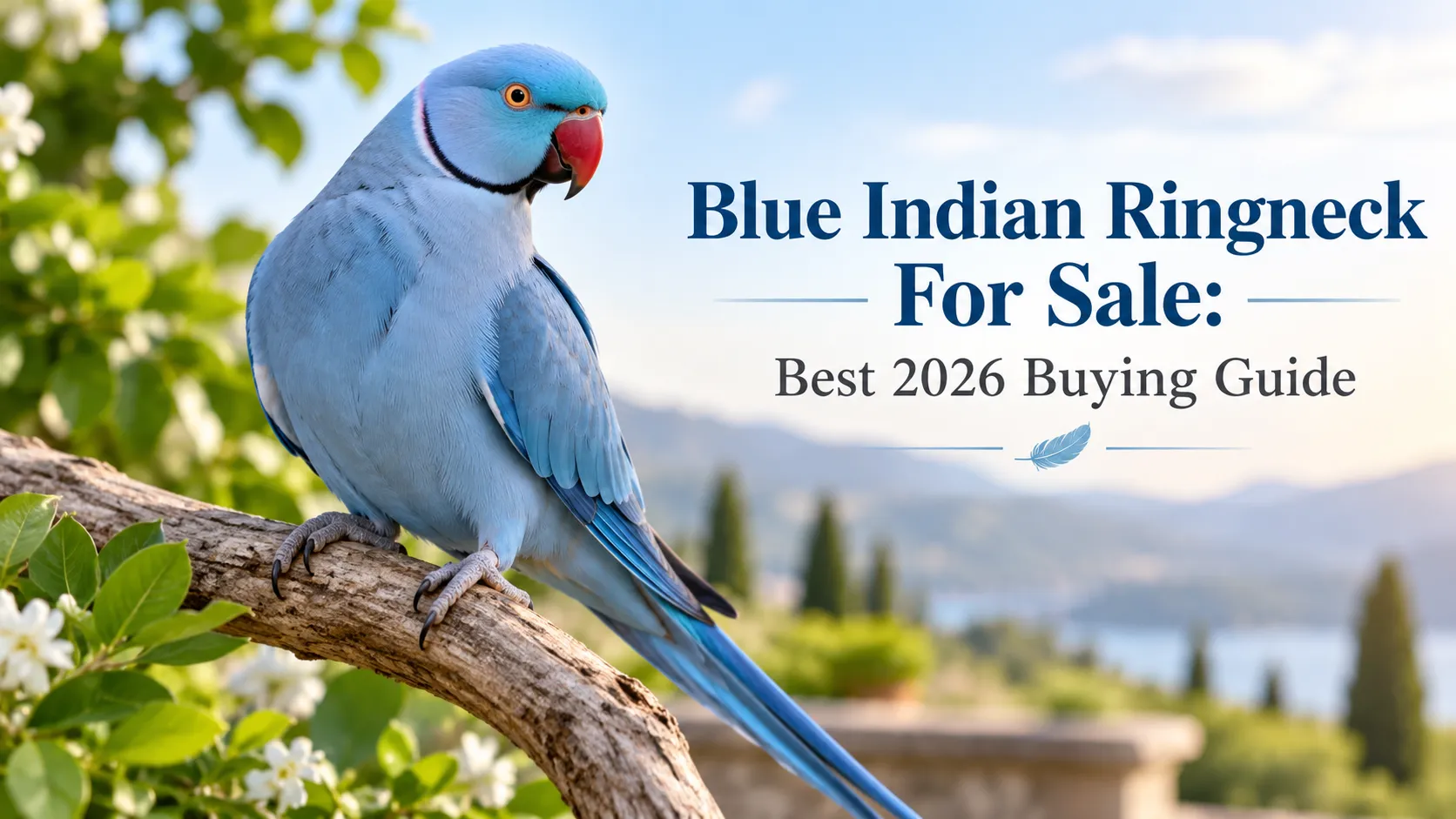
If you have been searching for a Blue Indian Ringneck for sale, you already know this color mutation turns heads. The sky-blue plumage, coral-red beak, and classic rose-pink neck ring make it one of the most requested parakeet colors we breed. This guide covers everything you need before bringing one home: what the Blue Indian Ringneck actually looks like, 2026 pricing, temperament, DNA sexing, and how to spot a healthy, well-bred bird.
Table of Contents
What Makes the Blue Indian Ringneck So Special?
The Blue Indian Ringneck Parakeet (Psittacula krameri) is a color mutation of the wild green Indian Ringneck. A single recessive gene removes the yellow pigment from the feathers, leaving only the blue structural color behind. The result is a bird with pale, powder-blue plumage from crown to tail instead of green.
Up close, the mutation is easy to identify. The wings carry a slightly darker slate-blue shade, the long tail fades to a soft pastel blue, and the beak stays a bright coral-red just like the wild-type bird. Adult males develop the breed’s signature black and rose-pink neck ring, which stands out sharply against the pale blue throat.
Because the blue mutation is relatively uncommon compared to green, a well-socialized Blue Indian Ringneck for sale tends to attract more interest and hold its value better than standard-colored birds.
Male vs. Female: Reading the Neck Ring
Both sexes hatch without a visible ring. Males typically begin showing the black and pink neck ring between 18 months and 3 years of age, while hens either never develop a ring or show only a faint shadow of one. Because the ring takes years to appear, it is not a reliable way to sex a young bird.
-
DNA sexing is the only accurate method for a juvenile Blue Indian Ringneck
-
A visible black and pink ring on an adult almost always indicates a male
-
Hens can be just as vocal and intelligent as males despite the lack of a ring
-
Ring color intensity can vary slightly between individual birds
The Genetics Behind the Blue Mutation
Color mutations in parrots come down to pigment chemistry. Wild Indian Ringnecks produce two pigments: a blue structural pigment embedded in the feather structure, and a yellow pigment called psittacin layered over it. Combined, those two pigments read to the eye as green.
The blue mutation is caused by a recessive gene that blocks the bird from producing psittacin. With the yellow layer gone, only the underlying blue structural color remains visible, which is why every feather on a Blue Indian Ringneck reads as a clean, cool blue rather than green or turquoise.
Because the gene is recessive, two visibly green parents can still carry it and produce blue babies if both carry a copy. This is also why a Blue Indian Ringneck for sale commands a premium over standard green birds: predicting and producing the color reliably takes selective breeding over multiple generations.
Setting Up a Home for a Blue Indian Ringneck
Indian Ringnecks have a long tail and an active flight style, so cage size matters more for this species than for a lot of smaller parakeets. A cramped cage is one of the most common reasons an otherwise friendly bird becomes cage-aggressive or starts feather plucking.
-
Minimum cage size: 24 x 24 x 36 inches, larger is always better
-
Bar spacing: no more than 5/8 inch to prevent escapes or injuries
-
Include at least 3 perches of varying diameter to exercise the feet
-
Add chew-safe wood toys, since Ringnecks are heavy chewers
-
Place the cage in a social area of the home, away from direct drafts
A Blue Indian Ringneck for sale as a hand-raised baby usually adapts quickly to a new cage, especially if the setup includes familiar foraging toys from day one. Rotating two or three toys in and out each week keeps the environment interesting without overwhelming a young bird.
Diet Essentials
A balanced diet keeps the blue mutation’s feather color vibrant and supports the long lifespan this species is known for. Seed-heavy diets are a common mistake, and they are linked to obesity and fatty liver disease in Ringnecks over time.
-
A high-quality pelleted formula as the nutritional base
-
Fresh leafy greens and vegetables offered daily
-
A small amount of fruit as an occasional treat
-
A limited portion of seeds or nuts, not the main diet
Avocado, chocolate, caffeine, and onion should always be avoided, since all four are toxic to parrots. If you are unsure whether a food is safe, checking with an avian vet before offering it is always the safer choice.
Blue Indian Ringneck For Sale: 2026 Price Guide
Pricing for a Blue Indian Ringneck for sale generally starts around $549.99 for a hand-raised baby between 12 and 16 weeks old. Optional add-ons let you customize the purchase to your needs:
| Item | Price | What it includes |
|---|---|---|
| Base price | $549.99+ | Hand-raised baby, 12-16 weeks old |
| DNA sexing | +$45 | Lab-certified gender testing |
| Disease panel | +$75 | Pre-shipment avian health screening |
| Starter kit | +$60 | Cage essentials and feeding supplies |
Compared to rarer mutations like Violet or Albino, Blue sits in the mid-range of the Indian Ringneck color spectrum: striking enough to stand out, but more widely available than the rarest colors. If you want to see how Blue compares to Green, Lutino, Grey, and the other seven mutations side by side, our Indian Ringneck color mutations guide breaks down pricing and availability for every variety we work with.
Temperament and Daily Care
Indian Ringnecks, including the Blue mutation, are intelligent and energetic parrots that thrive on daily interaction. They are not a “set it and forget it” pet. A bored Ringneck can become loud or nippy, while a well-exercised and mentally stimulated one is playful, affectionate, and an excellent talker.
Here is what a healthy routine looks like for a Blue Indian Ringneck:
-
Provide at least 1-2 hours of supervised out-of-cage time every day
-
Offer a varied diet of pellets, fresh vegetables, and limited fruit
-
Rotate foraging toys weekly to prevent boredom
-
Begin step-up and target training early to build trust
-
Schedule an annual avian vet checkup once the bird is home
With consistent handling started young, a Blue Indian Ringneck for sale as a weaned baby typically bonds quickly and can learn a vocabulary of 20 to 50 words or more. Talking ability varies by individual, but Ringnecks as a species are considered one of the more reliable talkers among mid-sized parrots.
Lifespan, Size, and Noise Level
Shoppers comparing a Blue Indian Ringneck for sale to other parakeets often ask about size first. At roughly 12 inches long and 100-120 grams, the Blue Indian Ringneck is a mid-sized parakeet with a long-term commitment attached: a lifespan of 25 to 30 years when well cared for. Noise level is moderate, with occasional loud calls rather than constant screaming, making it more apartment-friendly than a conure or cockatoo.
How to Buy a Healthy Blue Indian Ringneck For Sale
Not every Blue Indian Ringneck for sale online comes from the same standard of care. Before you commit, confirm a few basics with the breeder or seller.
-
Ask whether the bird is hand-raised and what age it was weaned
-
Request proof of a recent disease panel or health screening
-
Confirm whether DNA sexing results are available or offered as an add-on
-
Ask about the health guarantee and what it covers after shipping
We ship nationwide via Delta Cargo and USPS Priority Express, with local pickup also available in Southern California. Every bird leaves with a 3-day health guarantee, and DNA sexing or a disease panel can be added at checkout for buyers who want extra peace of mind before the bird even leaves our aviary.
Frequently Asked Questions
Is the Blue Indian Ringneck rare?
A Blue Indian Ringneck for sale is less common than the wild-type Green but more widely bred than rarer mutations like Violet or Albino, which keeps pricing moderate compared to the rarest colors.
Can a Blue Indian Ringneck talk?
Yes, a Blue Indian Ringneck for sale can become an excellent talker. Indian Ringnecks are known for clear speech, and a hand-raised Blue Indian Ringneck started young can typically learn 20-50 words or more with consistent practice.
How do I know if my Blue Indian Ringneck is male or female?
DNA sexing is the only reliable method before the neck ring appears. Males usually develop the black and pink ring between 18 months and 3 years old; hens generally do not.
Where can I find a Blue Indian Ringneck for sale near me?
We ship hand-raised, DNA-tested Blue Indian Ringnecks nationwide, with local pickup available in Southern California. You can see current availability and pricing on our Blue Indian Ringneck product page.
For more background on the species overall, including wild coloring and natural range, see the Rose-ringed Parakeet entry on Wikipedia.
A Blue Indian Ringneck for sale is a long-term companion, not an impulse purchase. Take the time to confirm health testing, ask about DNA sexing, and make sure you are ready for a bird that may be part of your family for 25 years or more. Done right, few parakeets reward that commitment with as much color and personality.