Baby Lovebird Growth Stages From Hatching to Weaning
Updated November 7, 2026
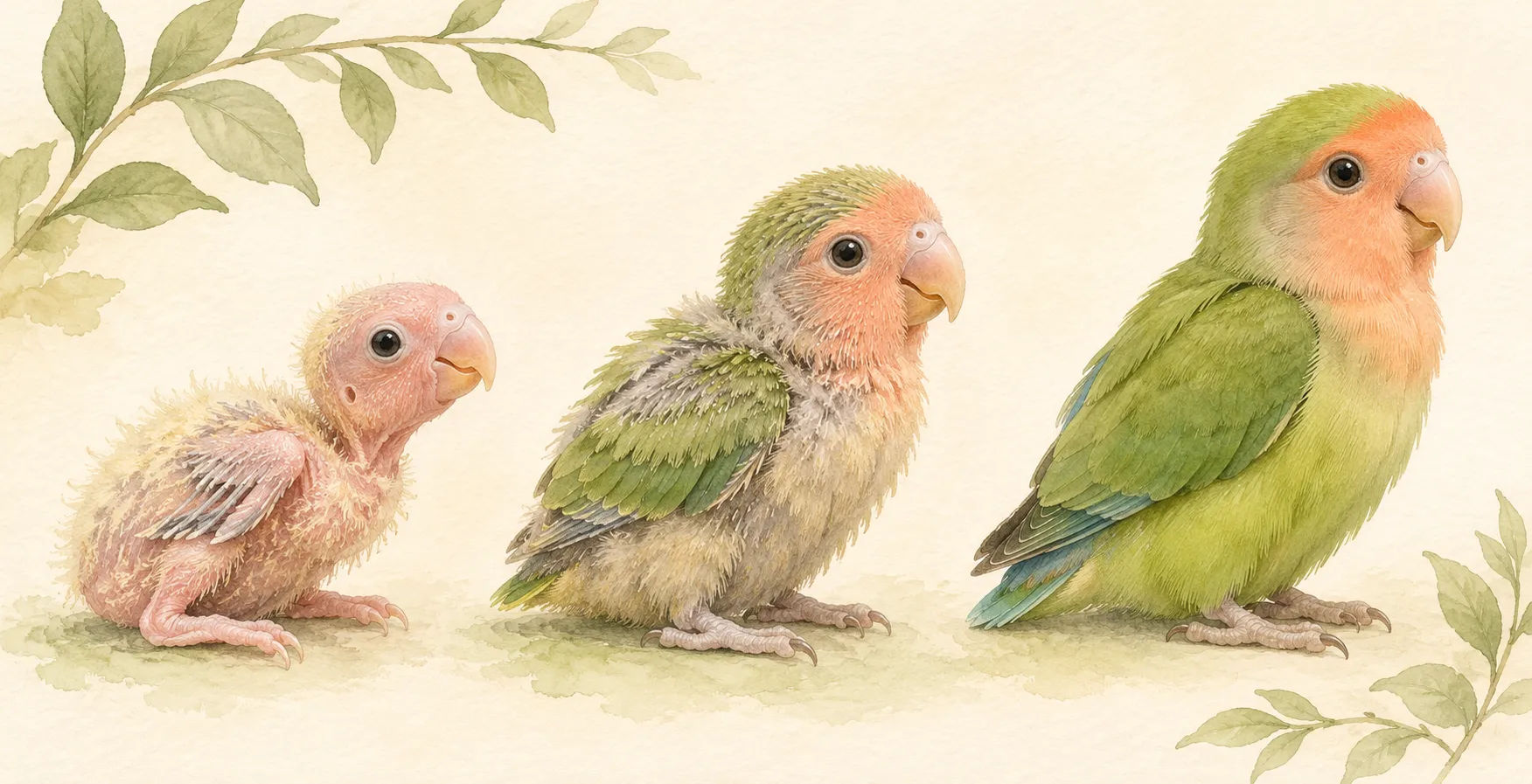
Baby lovebird growth stages progress from a dependent hatchling to a feathered juvenile that can fly and eat on its own. Fledging and weaning are separate milestones. A young lovebird should be fully weaned before going home.
Baby lovebird growth stages at a glance
-
Hatchling: The chick depends on its caregivers.
-
Feathering: Pin feathers emerge and gradually open.
-
Fledging: The young lovebird starts leaving the nest and practicing flight.
-
Weaning: The bird gradually learns to eat independently.
1. The dependent chick
Early chicks need specialized care. For a family following a nursery bird, useful updates include the hatch date, species and the next milestone the breeder expects to observe. Let the caregiver explain the bird’s progress and any change to the expected collection date.
2. Feather development
New feathers emerge inside protective sheaths called pin feathers. As feathers open, the young bird’s outline and colors become clearer. Plumage alone cannot establish that it is ready to leave the nursery. A dated photo series can show progress more clearly than one close-up.
3. Exploring and fledging
Fledging is the transition toward leaving the nest and flight. The Unusual Pet Vets lists typical lovebird fledging at around 35–40 days and weaning at around 45–55 days. These are reference ranges, and individual timing varies. Review the veterinary guide to companion-bird development.
4. Weaning and independent eating
A young bird gradually learns to eat independently. Picking at a bowl does not by itself establish adequate intake. Ask the breeder how independent eating and progress have been assessed. Avoid setting a collection date that pressures a chick to finish weaning. Lafeber’s breeder checklist emphasizes individual weaning schedules.
First-time owners should arrange to bring home a fully weaned bird. Hand-feeding requires practical training and appropriate supervision. If a young bird is not eating or its development concerns you, contact an avian veterinarian.
Questions to ask before pickup
Ask which milestone your bird has reached and what progress the breeder wants to see before pickup.
-
What is the hatch date and species?
-
Is this bird fully weaned and eating independently?
-
What food and routine is it used to?
-
What handling experiences has it had?
-
Which tests were performed on this individual bird?
-
What written health and reservation terms apply?
Request written feeding instructions and keep the breeder’s contact information available. Confirm what is included in the price and whether any tests are optional. This makes it easier to prepare and compare offers.
Preparing for the first days at home
Ask what independent eating looks like for this individual and what routine you should keep familiar after arrival.
Plan the housing, food and veterinary appointment before collection. Ask the breeder about the bird’s current routine so the transition starts with familiar care. VCA recommends a veterinary examination soon after acquiring a new bird. Read its lovebird overview for general background.
Write down questions as you watch nursery updates. You might want to know which foods the bird recognizes, how it responds to handling or how the caregiver decides it is ready. Those details are more useful than expecting every chick to develop on the same calendar.
Frequently asked questions about baby lovebird growth stages
When do baby lovebirds start flying and eating on their own?
Veterinary reference ranges put fledging at about five to six weeks and weaning at about six and a half to eight weeks. Individual timing varies. Ask the breeder to confirm that your bird is eating independently before scheduling pickup.
Can a photo tell me the exact age?
A photo can show broad development. Ask for the hatch record to confirm age. Lighting, posture, species and feather development can make comparisons between photos misleading.
Does flying mean a lovebird is weaned?
Flight and independent feeding are separate milestones. Confirm feeding readiness with the breeder even when a bird is already exploring and flying.
When can I reserve a baby lovebird?
Ask Mo about the specific bird or nursery group. Confirm availability and reservation terms before making arrangements. The expected ready date should reflect the individual bird’s progress.
Explore lovebirds at Morphnests
Visit our baby bird nursery, compare our lovebird price guide, or browse lovebird listings. For questions about a baby lovebird’s growth stages, species or availability, contact Mo with the bird you are interested in and whether you need pickup or a delivery quote.