African Grey for Sale: How to Buy a Hand Raised African Grey Parrot
Updated October 20, 2026
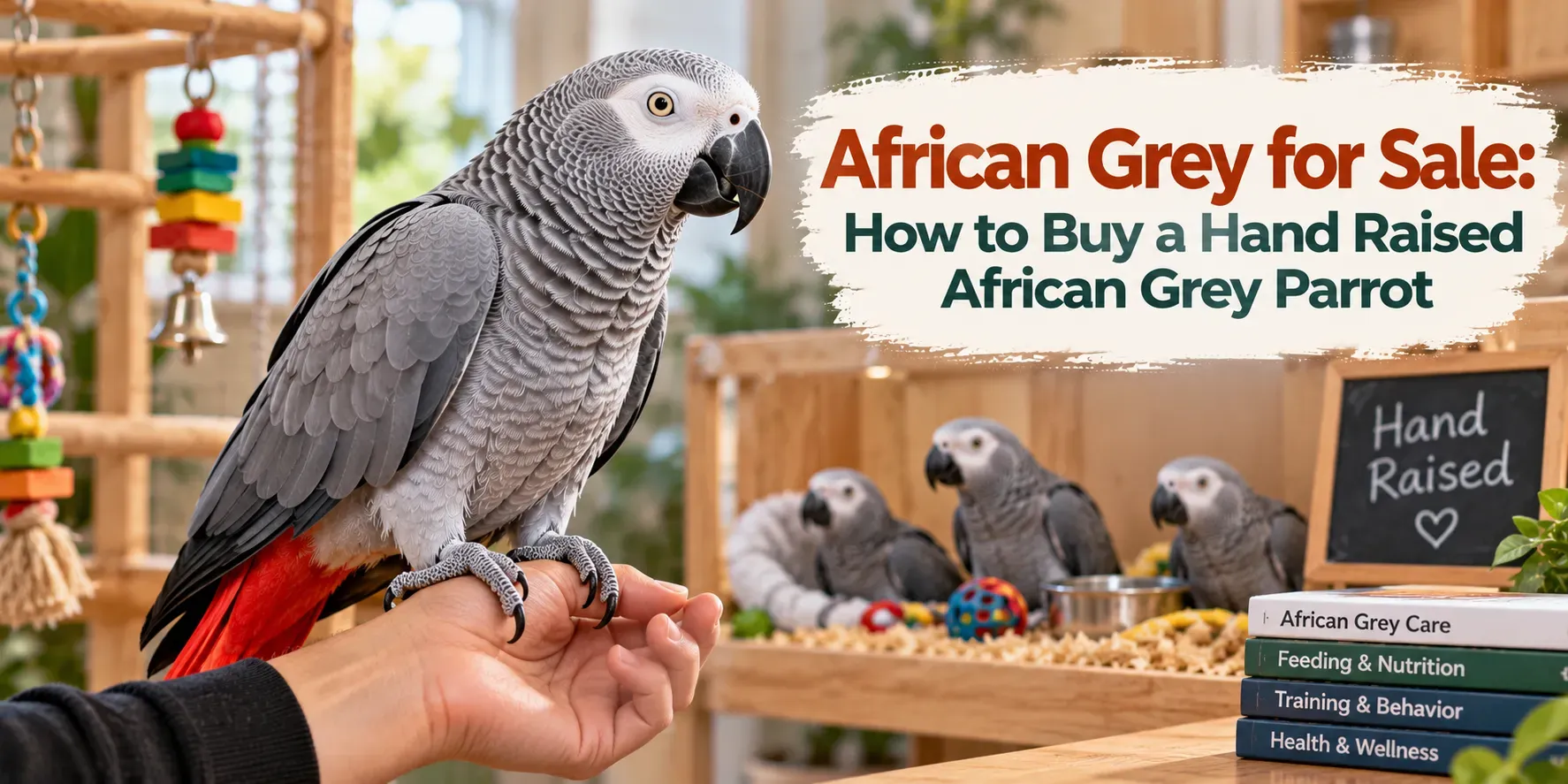
The African Grey is the most searched parrot on the internet, and the reason is simple. It is famously intelligent, a gifted talker and a deeply bonded companion that can share your home for half a century. If you are looking for an African Grey for sale, you are probably comparing prices, trying to understand what you actually get and wondering how a bird this valuable can be shipped safely. This guide answers all of that and shows you exactly how to buy a hand raised African Grey with confidence.
African Grey parrots for sale: Congo and Timneh
There are two types of African Grey available to pet owners, and the choice affects both price and personality. The Congo is the larger and more common bird, with a light grey body and a bright red tail. The Timneh is slightly smaller, with a darker charcoal body and a maroon tail, and is often described as quicker to adjust to change. See the full comparison in our Timneh vs Congo African Grey guide.
| Type | Size | Typical Price 2026 | Lifespan |
|---|---|---|---|
| Congo African Grey | 12 to 14 inches | $2,750 to $6,000 | 40 to 60 years |
| Timneh African Grey | 11 to 13 inches | $3,500 to $5,700 | 40 to 55 years |
Morphnests lists African Greys starting at $2,749.99. You can see the current birds on the African Grey product page and the African Greys category page, and ask about Timneh availability on the Timneh African Grey page.
Why a hand raised African Grey does not cost $200
Some buyers search for an African Grey for $200 and are surprised by what they find. The honest answer is that a healthy, hand raised, tested African Grey cannot be produced for that price. A pair of Greys lays only a few eggs a year. Each chick is fed by hand for roughly 14 to 20 weeks. The bird needs disease testing, DNA sexing and months of food and care before it is ready for a home. All of that adds up to thousands of dollars. Our guide on why African Greys are so expensive explains the full cost behind the price.
What you get when you buy a hand raised African Grey from Morphnests
-
A hand raised baby. Fed by hand and handled daily so it is tame and ready to bond.
-
Disease testing. Every bird is disease tested before it goes home.
-
DNA sexing available. So you know whether you have a male or a female.
-
Nationwide shipping. To all 50 states with USPS Priority Express overnight or Delta Cargo airline transport.
-
Lifetime support. Mo stays reachable for questions about diet, behavior and care for as long as you own the bird.
How to buy an African Grey step by step
-
Choose Congo or Timneh using the guide above.
-
Contact Mo and ask about the birds that are available now.
-
Request recent photos and video of the exact bird.
-
Review the health testing and ask about DNA sexing.
-
Confirm shipping by USPS Priority Express overnight or Delta Cargo, or arrange a visit.
-
Prepare the cage and room before the bird arrives.
To start, contact Mo or call (310) 901-6896.
How shipping works for an African Grey
Mo ships to all 50 states using either USPS Priority Express overnight or Delta Cargo airline transport, and every box and heat pack is chosen with the bird’s safety first. You can read the full details on our shipping page. Buyers in California should also see our page on African Greys for sale in California, buyers in Texas can see how delivery works to their major airports, and buyers in Southern California can arrange a visit to the aviary.
Is an African Grey the right bird for you?
African Greys are remarkable, but they are not a casual pet. They are highly sensitive, they bond deeply and they can develop stress behaviors such as feather plucking when bored, lonely or short of sleep. They need 2 to 3 hours of daily interaction, regular training and foraging toys, a pellet based diet and 10 to 12 hours of quiet sleep every night. If you can give that, a Grey is an extraordinary companion.
Learn the full daily routine in our Congo African Grey care guide and see typical costs in our African Grey cost guide.
Do African Greys really talk?
Yes, and they are among the best. Most Greys begin speaking between 12 and 18 months, and a well socialized Congo can learn 100 to 300 words or more, often using them in context. No parrot is guaranteed to talk, and individual birds vary, but Greys are the species most likely to surprise you. See how they compare in our best talking parrots ranked.
Congo or Timneh: which should you buy?
If you want the classic look, the brightest red tail and the largest possible vocabulary, choose a Congo. If you want a slightly smaller bird that often adjusts to change a little faster and sometimes starts talking earlier, a Timneh is a wonderful choice. Both are equally intelligent and equally long lived. The right pick is the bird you connect with and the one that is available when you are ready, so ask Mo what is available now.
Male or female African Grey?
There is no reliable difference in intelligence, talking ability or affection between males and females, and individual personality matters far more than sex. African Greys look alike, so DNA sexing is the only way to know. If you care about the sex of your bird, ask Mo about DNA sexing before you buy.
What to look for in a healthy baby African Grey
-
Bright, clear eyes with no discharge.
-
Smooth, clean feathers with no bald patches.
-
An alert, curious posture and a bird that is comfortable with being handled.
-
Regular, well formed droppings and a good appetite.
-
A full, rounded body without visible weight loss.
Your first month with an African Grey
The first week is for settling in. Keep the room quiet, offer familiar food and talk softly to your bird without forcing contact. In weeks two and three, begin short sessions of step up training with a favorite treat. By the end of the first month, many Greys are comfortable with their routine, will perch on your hand and may start to copy sounds they hear every day. Be patient. Greys are cautious, and trust is built through steady, calm repetition.
What does an African Grey cost to keep?
After the purchase, expect roughly $100 to $200 per month for pellets, fresh vegetables, toy replacement and a vet savings fund, plus an emergency fund of at least $1,000. The first year also includes a cage, which typically costs $500 to $1,200.
What to prepare before your African Grey arrives
-
A cage of at least 36 by 24 by 48 inches with sturdy bars.
-
A pellet diet, fresh vegetables and a small supply of nuts for treats.
-
Foraging toys and a rotating set of chewable items.
-
A quiet sleeping spot where the bird can rest in darkness for 10 to 12 hours.
-
An avian vet appointment for the first weeks.
Questions to ask before you buy
-
How old is the bird, and when was it weaned?
-
What is the bird eating now, and can I get the same food?
-
Has the bird been tested, and can I see the results?
-
Is the bird a Congo or a Timneh?
-
How will it travel, and when will it arrive?
Ready to buy an African Grey?
See the birds on the African Grey product page, browse the African Greys category, or contact Mo with your questions. Hundreds of families trust Morphnests, and every Grey is hand raised with care.
Frequently asked questions
How much is an African Grey for sale?
A hand raised African Grey starts at $2,749.99 at Morphnests. Typical prices run $2,750 to $6,000 for a Congo and $3,500 to $5,700 for a Timneh in 2026.
Can I buy an African Grey for $200?
No. A healthy, hand raised, tested African Grey costs thousands of dollars to produce. A price like $200 is far below what hand raising, testing and care actually cost.
Do you ship African Greys?
Yes. Morphnests ships to all 50 states using USPS Priority Express overnight or Delta Cargo airline transport.
What is the difference between a Congo and a Timneh?
The Congo is larger with a bright red tail, while the Timneh is smaller with a darker body and a maroon tail. See our Timneh vs Congo guide.
Are African Greys good for first time owners?
They can be, but they need a lot of time, mental stimulation and consistent routine. They are best for owners ready for a long commitment.
How old should an African Grey be when I buy it?
A fully weaned baby, usually around 14 to 20 weeks, is easiest to bond with. Ask the aviary for the exact weaning date.